
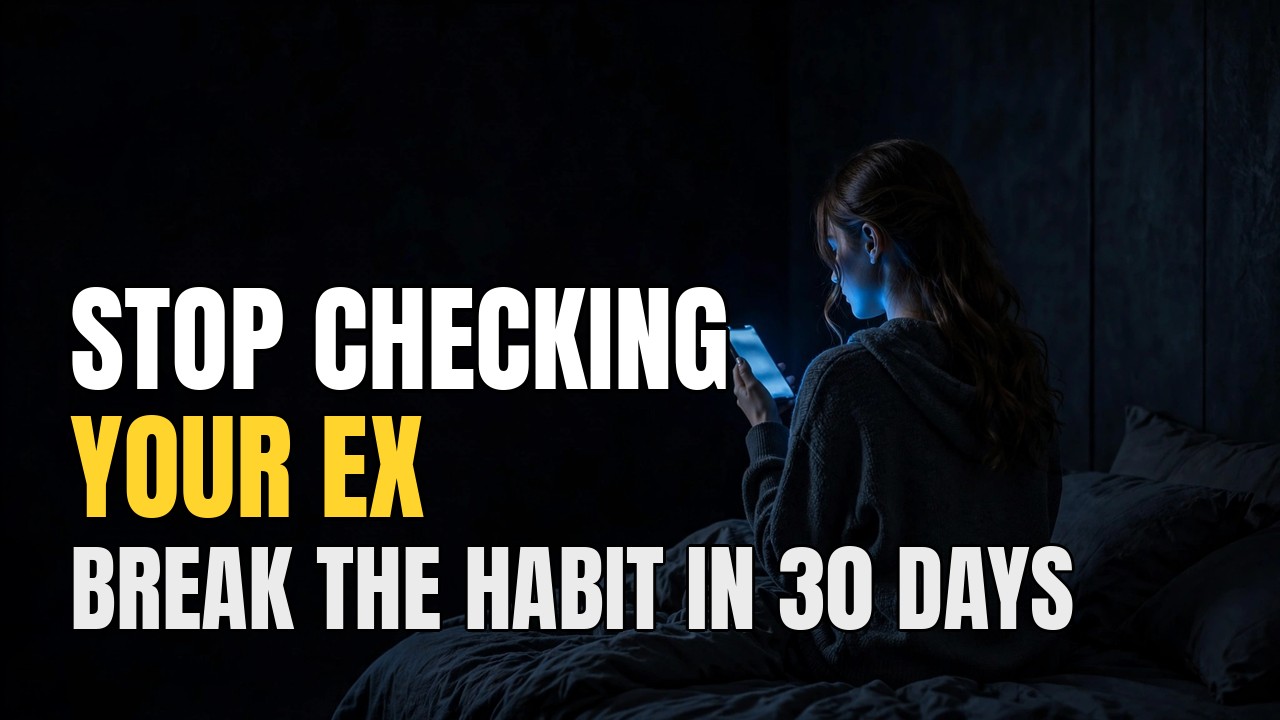
The breakup ended weeks ago, maybe months, but your fingers still know the way. Late at night or in a quiet moment at work, you open their Instagram, scroll their WhatsApp status, or search their name just to see if anything changed. You tell yourself it is just curiosity, but afterward you feel worse: jealous, anxious, hollow. You are not weak, and you are not alone. Checking an ex’s social media has become one of the most common habits after a breakup, and one of the most damaging to recovery.
This article explains why the habit is so hard to break, what research says about its effect on healing, and a practical plan to stop. Just a clear path from compulsive checking to genuine peace.
1. Why You Cannot Stop Checking: The Reward Loop
Every time you check your ex’s profile, your brain runs a small experiment. Sometimes there is nothing new, and you feel a brief, flat relief. Sometimes there is a new photo or a story that looks like a hint, and your stomach drops. Psychologists call it a variable reward schedule, the same mechanism that keeps people pulling slot machine levers.
Three triggers drive most of it:
- Boredom or idle moments. Waiting in a queue, lying in bed before sleep, a dull afternoon. Your brain reaches for the most emotionally charged app on your phone.
- Emotional spikes. Loneliness, jealousy, a song that reminds you of them. The pain arrives, and checking feels like doing something about it.
- Milestones and dates. Their birthday, your anniversary, festivals like Eid when couples post photos. These days inflate the urge.
Willpower alone rarely beats a habit that runs on autopilot. You have to redesign the environment around it, which is what the sections below do.
2. What the Research Says: Checking Slows Your Healing
This is not just folk wisdom. A study by psychologist Tara C. Marshall at Brunel University, published in Cyberpsychology, Behavior, and Social Networking (2012), examined 464 adults who kept tabs on a former partner through Facebook. The findings were clear: people who actively monitored their ex’s profile reported greater current distress about the breakup, stronger negative feelings, more longing, and less personal growth afterward. Simply staying Facebook friends without actively snooping was less damaging in the short term, but even that was linked to lower personal growth. The pattern held after accounting for offline contact and personality differences.
A follow-up experiment found that just imagining an ex’s Facebook profile triggered far more jealousy than imagining the same person in a neutral setting. The screen itself is the trigger. Every check reopens the wound, feeds false hope, and hands your emotional state to whatever your ex decided to post that day.
3. Name What You Are Actually Looking For
Checking is rarely about the profile. It is about one of these questions:
- “Are they suffering like I am?” You want proof the breakup cost them too.
- “Have they replaced me?” You are scanning for a new partner, which is really a scan of your own worth.
- “Is there a door still open?” A vague post feels like a signal, and signals keep false hope alive.
- “Did I make a mistake?” You are re-litigating the breakup with incomplete evidence.
Try this exercise tonight. The next time the urge arrives, pause and finish this sentence out loud: “I am checking because I want to know ___.” Naming the real question shrinks its power, and no profile visit has ever answered these questions honestly. A curated photo grid cannot tell you if they miss you. It only shows what they want seen.
4. Decide: Unfollow, Mute, or Block
You cannot heal while keeping your ex one tap away. Choose one of three levels and commit for at least 30 days:
- Unfollow (or unfriend). The gentlest step. Their posts stop appearing in your feed, and you are no longer an audience for their stories. On Instagram, you can also remove them as a follower. This is enough for many people.
- Mute. Best when unfollowing feels socially complicated, for example when you share a circle in a Pakistani joint-family or university setting and unfollowing would spark gossip. Muting hides their posts and stories without changing the connection status. Nobody is notified.
- Block. The firmest option, and often the kindest to yourself. Blocking removes their profile from your searches and prevents the late-night “just one look.” If you have tried the softer options and relapsed, blocking is not dramatic, it is decisive.
Do not announce your decision. No farewell message, no cryptic story. Quiet distance heals faster than dramatic exits. If you are unsure which level fits, read our guide on whether you should block your ex after a breakup.
5. Make It Harder: Remove Access and Add Friction
Habits survive on convenience. Add friction and the urge loses its grip. Work through this checklist in one sitting:
- Delete the search history. Clear their name from Instagram search, and delete the chat thread in WhatsApp so their name is not one tap away. (Archive it first if you need the records for closure.)
- Remove the app from your home screen. Move Instagram, Facebook, or TikTok off the home screen, or delete the app entirely for a few weeks and use the browser version only. That extra ten seconds of loading is often enough to let the urge pass.
- Log out on one device. If you check mostly on your laptop, log out there. If it is your phone, set a screen-time limit or an app timer that locks the app at night.
- Turn off their story notifications. If you ever enabled notifications for their posts, disable them now.
- Ask one trusted person for help. Tell a close friend: “If I mention checking, remind me why I stopped.” Accountability turns a private relapse into a shared commitment.

In South Asian contexts there is one more layer: family WhatsApp groups where your ex’s updates arrive through other people’s forwards. Mute the group, skip the forwards, and ask one relative to stop sending screenshots. Most will respect a direct, calm request.
6. Replace the Ritual, Especially at Night
Most checking happens in the same ten-minute window: in bed, lights off, phone in hand. You cannot just remove a habit; you must replace it, because the idle moment will still be there. Pick a replacement ritual for your highest-risk time:
- The phone-down rule. Charge your phone in another room, or at least face-down across the room, thirty minutes before sleep. Buy a cheap alarm clock if the phone was your alarm. This single change ends the majority of late-night checking.
- A ten-minute wind-down. Stretching, a short walk, making chai, writing three lines in a notebook about your day. Anything with your hands and attention beats scrolling.
- A “craving list.” Keep a note on your phone titled “Things I Want to Check.” When the urge hits, type the name there instead of searching it. Review the list weekly. Watching the entries stop mattering is powerful evidence of healing.

The first three nights feel like withdrawal. That is normal and it passes. By the second week, the urge usually visits far less often.
7. What to Do When You See Something That Hurts
Even with the best setup, you will sometimes see something: a mutual friend’s story, a tagged photo, news that they are dating someone new. Have a plan ready before it happens, because in the moment your judgment is at its weakest.
- Do not react. No reply, no angry message, no passive-aggressive story of your own. Anything you post in pain becomes regret by morning.
- Close the app immediately. Give yourself a physical reset: stand up, splash water on your face, step outside. Break the trance before it deepens.
- Translate the story you are telling yourself. “They look so happy” becomes “This is one selected photo.” Social media is a highlight reel, and pain makes you forget it.
- Write it out, privately. One paragraph about what you felt and why. Then close the notebook. Externalizing the feeling stops it from looping in your head.
- Talk to your person. Text the friend from section 5. A five-minute conversation does more for the ache than fifty minutes of scrolling.
Seeing something painful is not proof you failed. You noticed, you felt it, and you chose not to spiral. That is what recovery looks like.
8. The 30-Day Reset Plan
Here is the full plan on one timeline. Print it or save it where you will see it.
Days 1 to 3: Cut the supply. Unfollow, mute, or block. Clear search history, remove apps from the home screen, set the phone-down rule. Tell your accountability person.
Days 4 to 10: Survive the spike. The urge usually peaks in the first week because the habit is protesting. Use the craving list and the replacement ritual. Expect discomfort; it is withdrawal, not a sign you are doing it wrong.
Days 11 to 20: Rebuild the evenings. Fill the reclaimed time deliberately: call a friend, start a small project, exercise, read. Boredom is the habit’s best friend, so starve it of idle hours.
Days 21 to 30: Check your progress, not their profile. Reread your craving list. Notice how much less the entries sting. By now the urge, if it visits, usually lasts under a minute.
If you relapse on day 14, you have not ruined anything. Relapse is data, not defeat. Ask what triggered it, strengthen that weak spot, and keep going.
9. How You Will Know It Is Working
Recovery does not arrive with fireworks. It arrives quietly:
- You go a whole day without thinking about their profile, then notice that fact with mild surprise.
- Someone mentions their name and your stomach does not drop.
- You see a photo of them and feel neutral curiosity instead of a flood of questions.
- Your evenings belong to you again: your friends, your goals, your sleep.
- You stop rehearsing what you would say if you ever ran into them.

For a fuller picture, see our guide on signs you are finally moving on after a painful breakup, and how the brain clings to unfinished stories.
The goal is to stop renting space in your ex’s digital life so you can rebuild your own. Thirty days from now, you will be glad you started today.
Frequently Asked Questions
Is unfollowing or blocking my ex too dramatic?
No. Protecting your recovery is not drama, it is hygiene. Research consistently links active monitoring of an ex’s profile with greater distress and slower healing. Choosing distance is a mature part of recovery.
Will my ex know if I mute or unfollow them?
Muting is completely invisible; they are never notified. Unfollowing is also not announced, though they may notice eventually if they check. Blocking is visible only in that they can no longer find your profile. None of these actions sends a notification, so choose based on what protects you, not on how it looks.
What if we share mutual friends or family groups?
You cannot control what others post, but you can control your exposure. Mute the group chats where updates appear, ask one trusted relative to stop forwarding screenshots, and avoid the “stories” of mutual friends who post about your ex. A calm, private request almost always works better than a public announcement.
I keep relapsing at night. What am I doing wrong?
Night checking is usually a bedtime-routine problem, not a willpower problem. Charge the phone outside the bedroom for one week and relapses will drop sharply.
Is it okay to check once, months later, just to see how they are?
For most people, a single look after months of distance reopens the craving for days. If you are genuinely healed, the check will feel boring. If you are asking whether it is safe, that question is usually the answer: wait longer.
2 thoughts on “How to Stop Checking Your Ex’s Social Media: A Practical Guide to Breaking the Habit”