

In many South Asian families, a divorced woman at fifty is expected to quietly accept a life without companionship. Relatives assume she will devote herself to her children and her parents, and that the chapter of marriage is permanently closed. But life does not always follow that script. A woman in her fifties can still meet someone who respects her, shares her values and wants to build a future with her, and that person may be younger than her. The question is not whether a fifty year old divorced woman can marry a younger man. The answer is yes, she can. The real question is whether the relationship itself is right, and that deserves the same honest evaluation any marriage deserves at any age.

Age Is Only One Part of Compatibility
A woman in her fifties can absolutely meet someone younger and build a meaningful marriage. The more important questions are whether both people want the same kind of future, understand each other’s circumstances and can handle the practical realities together. Age is simply one data point among many. Far more important are shared values, mutual respect, emotional honesty and compatible expectations about daily life. A forty two year old man who is settled, emotionally mature and clear about what he wants can be a far better husband than a fifty five year old who is not. And the reverse is equally true. Age never guarantees compatibility on its own.
Consider the difference between the age on an ID card and the age of a person’s life experience. A woman of fifty who has managed a household, raised children and rebuilt her life after divorce carries a depth of experience that makes her an exceptionally grounded partner. A younger man who recognises and respects that is not settling for less. He is choosing something specific: warmth, stability, emotional clarity and a partner who knows who she is. Many men in their late thirties and forties actively prefer a partner with this maturity over someone their own age who is still figuring herself out. When the attraction is genuine and the values align, the gap in birth years becomes one of the least interesting things about the couple.
Still, honesty matters here. A woman considering this path should be clear eyed about her own motivations, not just his. Marry him because he is a good match for the life you want, not because the attention feels flattering after years of feeling invisible, and not because you are rushing to prove something to the relatives who counted you out. The strongest age gap marriages are the ones where both partners could honestly say they would choose each other even without the gap, because the connection itself is real. If you are weighing whether remarriage at this stage of life is right for you, you may also find it helpful to read our guide on signs a widow or divorced woman is truly ready to remarry, which covers the emotional readiness side in more depth.
Talk About Life Stage Honestly
A ten year age difference can mean different expectations around work, retirement, children, health, social life and family responsibilities. These conversations should happen before marriage rather than after assumptions collide. A man of forty may be in the middle of building his career while a woman of fifty is thinking about slowing down. He may want an active social life with friends his own age while she prefers quieter evenings. Neither preference is wrong, but they need to be named and negotiated openly rather than discovered as resentments five years later.
Children are often the biggest life stage question in this kind of match. A younger man may want biological children of his own, or he may be perfectly content with her existing family. There is no default answer, which is exactly why the conversation cannot be skipped. Discuss it directly: does he want children, would he be happy as a stepfather, what would that practically involve, and how would her adult children feel about a stepfather close to their own age? These are uncomfortable questions, but a relationship that cannot survive the conversation would not have survived the reality. Ask them early, in plain language, and watch whether he answers honestly or avoids the subject.
Health and caregiving also deserve a frank discussion. The age gap means, statistically, that the older partner may need support sooner. This is not a reason to reject the marriage, but it is a reason to plan. Talk about health habits, financial buffers, insurance and what support would look like in ten or twenty years. Couples who have this conversation feel more secure, not less, because the unspoken fear has been replaced by a shared plan. A younger husband who is willing to plan for the long term is showing exactly the kind of maturity that makes an age gap marriage work.

Family Pressure Can Be Real
In South Asian families especially, relatives may have strong opinions about age and remarriage. Listening to family is different from allowing everyone else to make the decision. The couple still has to live the marriage. An aunt who objects today will not be the one managing the household, the finances or the relationship tomorrow. Respect the wisdom of elders, hear their concerns out, and then remember that the person waking up in this marriage every morning is you.
It helps to understand what sits underneath family objections. Sometimes it is genuine worry: they fear you will be hurt again, or they believe a younger man cannot be serious. That concern, even when it is expressed badly, deserves a calm response. Share what you have observed about him, how he treats you, and the practical plans you have made together. Other times, though, the objection is about honour, reputation and what the neighbours will say. That is a different thing entirely, and it is worth naming the difference to yourself, even if you cannot say it out loud. Your marriage is not a performance for the street.
Real Life Note: In many Pakistani families, marriages strain or break not because of the couple but because of outside interference, most commonly from the husband’s mother and sisters, and sometimes from the wife’s mother. In a second marriage, this risk deserves special attention. Set respectful boundaries with extended family early, on both sides, and agree as a couple that marital decisions stay between the two of you. Couples who protect their privacy early protect their marriage later.
Do Not Hide the Previous Marriage
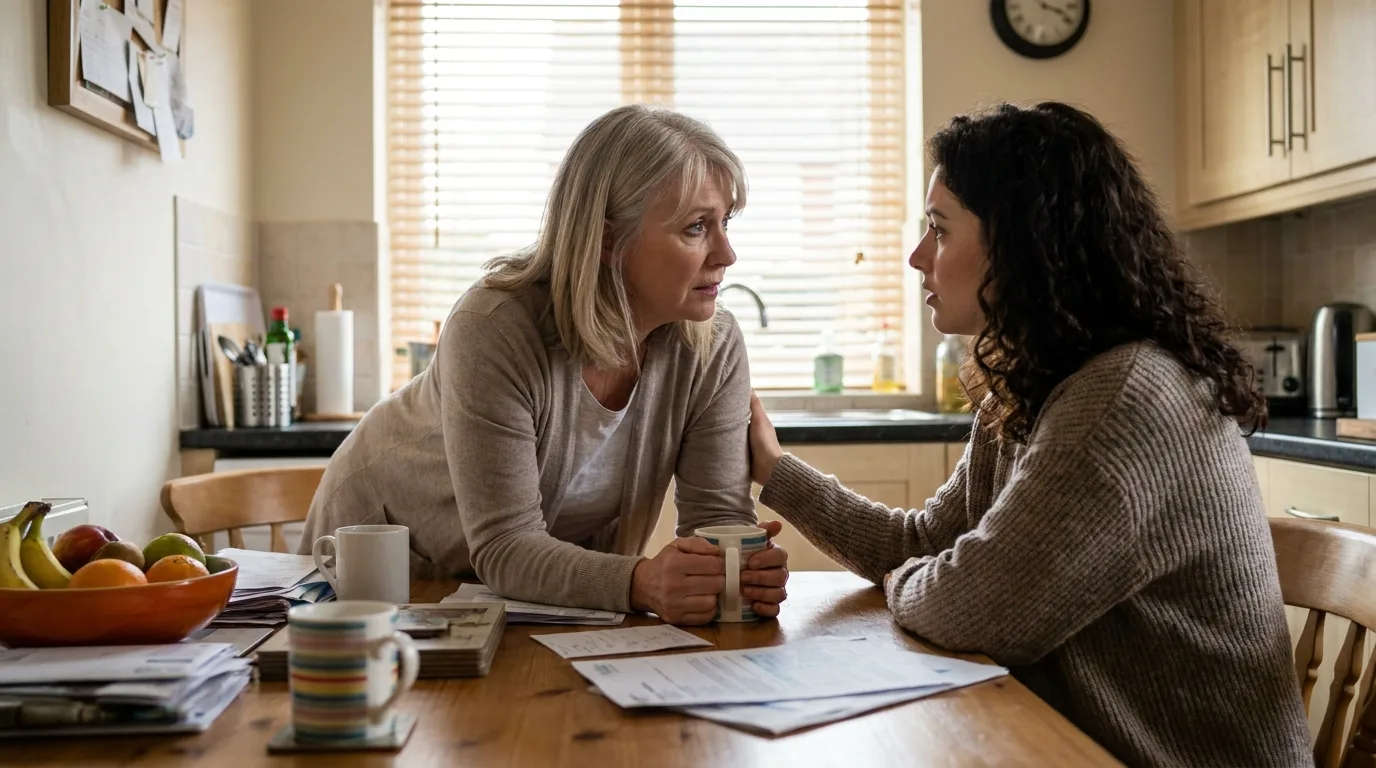
A divorce is part of someone’s history, not the whole identity. Both partners should understand what happened, what has been learned and what unresolved issues may still affect the new relationship. A younger man entering a marriage with a divorced woman deserves to know the full picture, not because the divorce is a stain, but because honesty at the start prevents shocks later. He should know why the first marriage ended, what the custody and financial arrangements are, and what emotional wounds are still healing.
This honesty has to run both ways. Her past is not the only history in the room. A younger partner may have his own failed engagement, his own family complications, or his own reasons for choosing an older partner that he has never examined. Encourage the same openness from him that you offer. A relationship where only one person’s past is on the table is not a partnership, it is an interview. The goal is mutual understanding, so that neither of you is managing a secret while trying to build trust.
There is one more reason disclosure matters: the extended family will eventually learn everything anyway, and it is far better that it comes from the couple, calmly and on their terms, than from a relative who digs it up and presents it as a scandal. Secrets give other people power over your story. When a divorced woman speaks about her past with dignity and without shame, she sets the tone for how everyone else is allowed to treat it. Shame invites gossip. Dignity invites respect.
Financial and Legal Practicalities Matter
Discuss housing, income, existing children, inheritance expectations, caregiving and other practical responsibilities. Romance does not make these subjects less important. In fact, in a second marriage with an age difference, they matter more, because there are more moving parts. Where will you live? What happens to her existing property or his rented home? Who pays for what, and what happens if one of you cannot work? These questions feel unromantic only until the day they become urgent.
Be especially clear about money earned and saved before the marriage. A woman of fifty may have savings, property or a pension built over decades, and she has every right to protect what she built. This is not distrust, it is common sense, and a mature partner will understand it without taking offence. Similarly, be transparent about debts, loans and ongoing financial obligations such as children’s education or support for ageing parents. Financial surprises are one of the most common causes of conflict in second marriages, and almost all of them are preventable with one long, honest conversation.
Legal paperwork should be treated as seriously as the wedding itself. Make sure the divorce is legally final with no pending appeals before any new marriage is registered. Review inheritance documents, nominations and wills, because a new marriage changes the legal picture. If either partner has children, clarify inheritance expectations openly rather than leaving them to be fought over later. In Pakistan, the nikah and its registration carry legal weight, so the terms should be discussed and documented properly. Practical planning is not the enemy of love. It is love with its eyes open.
Ask Whether the Relationship Feels Equal
The healthiest age gap relationships are not built around one person acting like a parent or rescuer. Both partners should have a voice, independent dignity and the ability to make decisions together. Watch for the warning signs of an unequal dynamic: does he defer to her on everything because she is older, losing his own opinions in the process? Or does she hand over all decisions to him to prove she is not controlling? Does one partner manage all the money, all the social plans, all the contact with family? Equality is not about splitting everything fifty fifty. It is about both people feeling that their needs, views and boundaries genuinely count.
The rescuer pattern deserves special attention in this kind of match. Sometimes a younger man is drawn to an older divorced woman because he wants to save her from loneliness, and sometimes she welcomes him because she is tired of managing everything alone. Rescue feels like love at the beginning, but it curdles into resentment when the rescued person recovers and the rescuer feels unneeded, or when the rescuer starts expecting gratitude as payment. A healthy question to ask is simple: if neither of us needed anything from the other, would we still choose each other? If the answer is yes, the foundation is sound.
Equality also shows up in small daily things. Who apologises first after an argument? Whose family gets visited more often? Whose career bends when there is a conflict? Whose friends are included in the couple’s social life? None of these need to be perfectly balanced at every moment, but over time the pattern should feel fair to both people. If you are unsure whether his intentions are fully genuine, our article on how to spot fake intentions before marriage covers verification steps that apply to any proposal, including checking consistency between words and actions when practical questions are asked.
Frequently Asked Questions
Is a younger husband a problem for a woman over 50?
Age difference itself does not determine relationship quality. Compatibility and shared expectations matter more. A younger husband is a problem only if the fundamentals are wrong: mismatched life goals, hidden motives, unequal power, or pressure from family that the couple cannot withstand. Research on age gap relationships consistently finds that satisfaction depends on the quality of the partnership, not the number of years between birthdays. Evaluate the man, not the maths.
How should children be involved?
Their feelings should be acknowledged, but adult partners should make the final marital decision responsibly. Adult children may struggle with the idea of a stepfather near their own age, and their discomfort is understandable. Give them time, introduce the partner gradually, and listen to their concerns without letting them veto your life. Young children need more careful handling: they should meet a prospective partner only when the relationship is serious, and they should never be asked to choose sides or keep secrets. In every case, the children’s wellbeing matters, but the marriage decision belongs to the adults entering it.
What matters most before remarriage?
Trust, compatibility, practical expectations and emotional readiness are more important than meeting someone else’s preferred age range. Before remarrying, both partners should be emotionally past their previous relationships, honest about finances and family obligations, aligned on the big life questions, and entering the marriage by choice rather than loneliness or pressure.
Real Life Note: In love, the most important thing is trust. Where there is trust, there is respect, and where there is respect, trust grows stronger. The two feed each other. This matters even more in a second marriage, because both partners arrive with wounds. Choose someone whose behaviour builds trust steadily, in small consistent actions, not someone who only talks about trust while avoiding accountability.
What if my family strongly opposes the age difference?
First, separate genuine concern from reputation anxiety. If the objection is that he seems unserious or financially unstable, treat it as useful data and investigate honestly. If the objection is only about what people will say, that is not a reason to abandon a good relationship. Many families come around once they see the couple is stable, respectful and happy together. Give them time, keep the door open, and avoid turning it into a battle, because ultimatums make people dig in. Live well, and let the marriage itself become the answer.
How large an age gap is too large?
There is no universal number, but honesty about the trade offs should grow with the gap. A five year difference raises few practical questions. A fifteen or twenty year difference raises real ones about energy levels, health timelines, retirement timing and social circles, and those need concrete answers, not just love. The test is always the same: can both partners describe, in specific terms, how daily life will work in ten and twenty years, and does that picture satisfy both of them? If yes, the number is just a number. If the future cannot be described, the gap is too large for this particular couple.
Final Thoughts
A second marriage should be evaluated as a relationship between two adults, not as a debate about what society thinks a woman of a certain age is allowed to want. A divorced woman at fifty has earned the right to choose her own happiness with the same seriousness anyone else would bring to the decision. Marrying a younger man is not brave or foolish in itself. It is simply a choice, and like every marriage choice, it succeeds or fails on the quality of the partnership: honesty about the past, clarity about the future, fairness in the present, and the quiet daily work of treating each other well. If those are in place, the birth years on two ID cards are the least important detail in the story.
1 thought on “Can a Divorced Woman at 50 Marry a Younger Man?”