
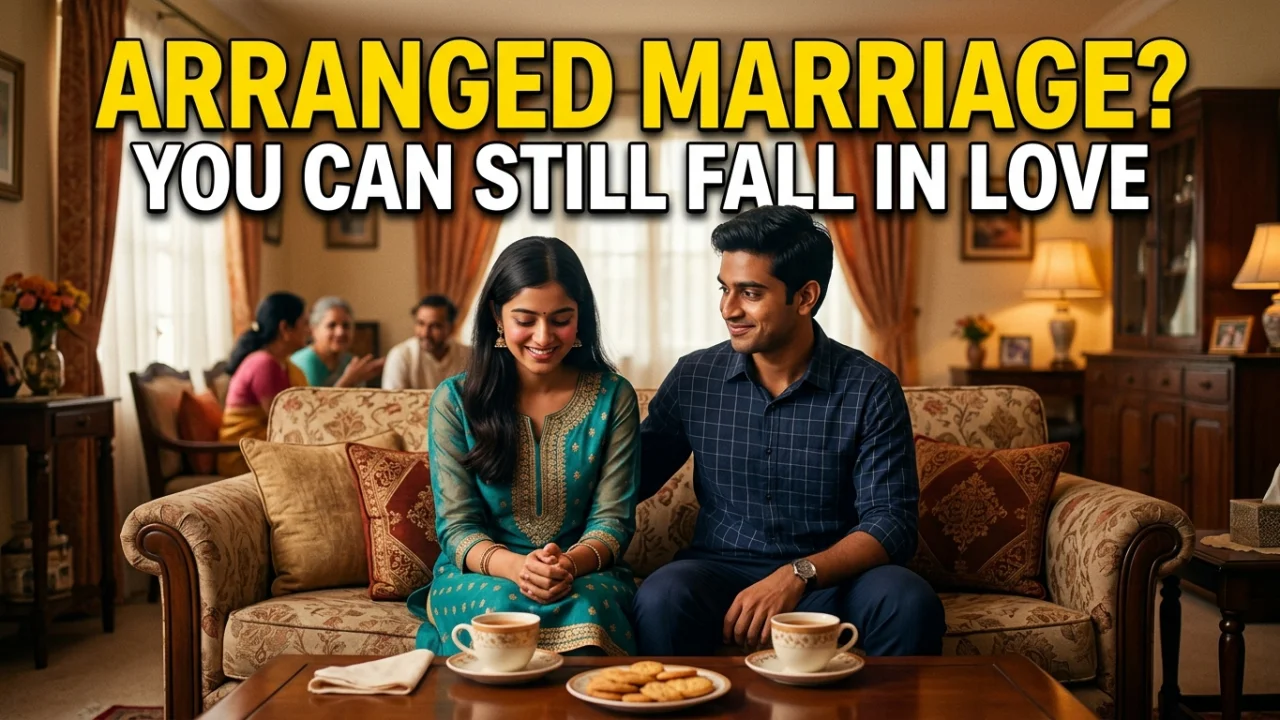
In films, love always arrives first: two people meet, sparks fly, and the wedding is the happy ending. An arranged marriage tells the story in the opposite order. Two people, often near strangers, agree to build a life together, and affection grows out of the life they build. This is not a lesser kind of love. It is simply a different sequence, and there is nothing about that sequence that makes the resulting bond less genuine.
If you are newly married through an arranged match, or considering one, you may be wondering whether real love can actually grow from such a beginning. The honest answer is yes, often, but not automatically. Love in an arranged marriage is not found. It is built, deliberately, through trust, friendship, shared rituals, and honest conversation. This guide walks through how that building actually happens, drawing on what counsellors and long-married couples consistently report.
Love Does Not Always Arrive First
In a love marriage, attraction usually leads and commitment follows. In an arranged marriage, the order is reversed: the commitment comes first, and the emotional bond develops through the shared life that follows. Many couples discover that love built on daily care, shared responsibility, and quiet loyalty feels steadier than love built on early intensity. The early months may feel polite and careful rather than passionate, and that is completely normal. Politeness is not the absence of love. It is often the seed of it.
What actually happens, in practice, is a slow accumulation of small discoveries. You learn how the other person takes their tea, how they handle a bad day at work, whether they check on you when you are ill, how they treat your parents. Each of these small moments adds a layer. Over months, the stranger gradually becomes the person you want to tell things to first. Counsellors who work with arranged couples say this pattern is extremely common: affection follows investment. The more of your life you genuinely share, the more you have to love. The wedding is the beginning of the story, not the climax of it.
In Pakistan, where the rishta process involves families, expectations, and practical matchmaking, this slower path is the norm rather than the exception. Do not measure your marriage against film romances, or against couples who dated for years before marrying. Your story has its own timeline. Comparing your month three to someone else’s year five will only make a perfectly healthy beginning feel like a failure. Judge your marriage by its direction, whether it is gradually becoming warmer and more honest, not by its starting point.
The First Goal Is Safety, Not Instant Chemistry
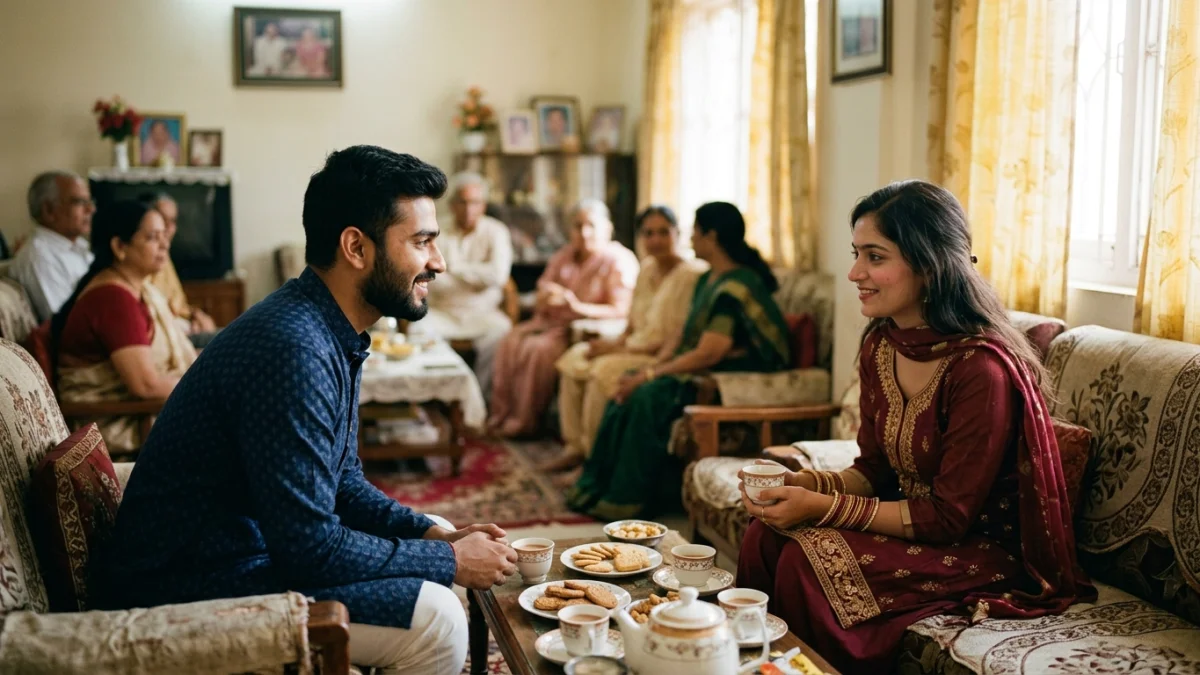
A first meeting does not need to feel like a movie scene. In fact, the couples who do best often describe their early meetings as calm and straightforward rather than electric. The useful questions at this stage are practical ones. Ask about daily routines, views on money and work, relationships with family, and what a good marriage looks like to each of you. Notice how the person listens. Do they ask you questions back, or only talk about themselves? Do you feel comfortable being honest, or do you feel you must perform?
Pay attention to behaviour, not just answers. How does this person treat the waiter, the driver, their own mother? Small courtesies in low-stakes moments reveal more about character than rehearsed answers to big questions. Also notice how they handle disagreement or an awkward pause. A person who stays respectful when a conversation gets slightly uncomfortable is showing you how they will handle the much bigger discomforts of married life.
For women especially, the early stage is about safety signals. Does he rush physical closeness or respect your pace? Does he accept that you want your family involved in the process, or does he pressure you to keep things secret? A calm beginning where both people feel respected is worth far more than butterflies. Chemistry can grow, but a lack of basic respect rarely fixes itself. Trust the quiet signals. They are usually telling the truth.
Friendship Gives Love Somewhere to Grow
Marriage becomes much easier when partners can talk without every conversation being about duties, bills, or family obligations. Share ordinary stories from your day. Laugh together at small things. Learn each other’s habits, the annoying ones included, and make space for interests that have nothing to do with family expectations. A marriage that contains a genuine friendship has a shock absorber for hard times. When romance dips, as it does in every marriage, friendship is what keeps the relationship warm.
Building this friendship takes deliberate, unglamorous effort. Set aside a few minutes every day for a real conversation, not a logistics briefing. Ask about their day and actually listen to the answer. Share something about your own inner life, a worry, a hope, a funny memory, not just your schedule. Humour helps enormously. Couples who can tease each other gently and laugh at the same things develop a private language that belongs to just the two of them, and that private language is one of the earliest forms of intimacy.
In many Pakistani households, newlyweds living with extended family get very little private time, which makes friendship harder to build. You have to create small pockets deliberately: an evening walk together, tea on the roof after dinner, a short drive on the weekend. It does not need to be grand. Friendship grows in unguarded moments, and unguarded moments need at least a little privacy. Protect that time together, even if it is only twenty minutes a day.
Expectations Need to Be Discussed
Money, living arrangements, work, children, household responsibilities, in-laws, and personal boundaries can become major sources of conflict if they remain unspoken. Many arranged couples avoid these conversations because they feel unromantic. The opposite is true. Discussing expectations is one of the most caring things two people can do for their future marriage. You are not killing the romance. You are protecting it from the resentment that grows when two people discover, too late, that they wanted completely different lives.
Have these conversations in a calm setting, not during a disagreement. Talk about finances openly: who earns, who spends, who saves, and how big decisions get made. Discuss careers honestly, including whether both partners will work and how household work will be divided. The question of where to live, with extended family or separately, is sensitive in Pakistani culture and deserves an honest discussion before the wedding if possible, or soon after. There is no single right answer, but there must be a shared one.
Expectations about in-laws need the same honesty. How often will each set of parents visit? Who makes decisions about children, money, and the home? Where is the line between respecting elders and surrendering your privacy? These conversations feel awkward, but couples who have them early report far fewer explosive fights later. An expectation discussed is a problem you can solve together. An expectation assumed is a landmine.
Make Small Promises and Keep Them
In an arranged marriage, trust starts from zero. You have no shared history to lean on, so every kept promise becomes a brick in the foundation. Call when you said you would call. Remember the small thing they mentioned in passing. Show up on time. Defend them once in front of a critical relative, and they will remember it for years. These are not grand romantic gestures. They are better than grand gestures, because they are repeatable, and trust is built on repetition.
Real Life Note: In love, the most important thing is trust. Where there is trust, there is respect, and where there is respect, trust grows stronger. The two feed each other. In an arranged marriage this cycle starts deliberately: each small promise you keep builds a little trust, and that trust makes genuine respect, and eventually love, feel natural rather than forced.
If trust gets damaged early, through a discovered lie or a broken important promise, address it directly and quickly. Do not let small betrayals calcify into permanent suspicion. An honest apology, changed behaviour, and patience can repair early damage. If trust has been seriously broken, there are practical, step-by-step ways to rebuild it (how to rebuild trust in a marriage). The key point is that trust in an arranged marriage is not a feeling you wait for. It is a record you build, one kept promise at a time.
Create Rituals That Belong to Just the Two of You
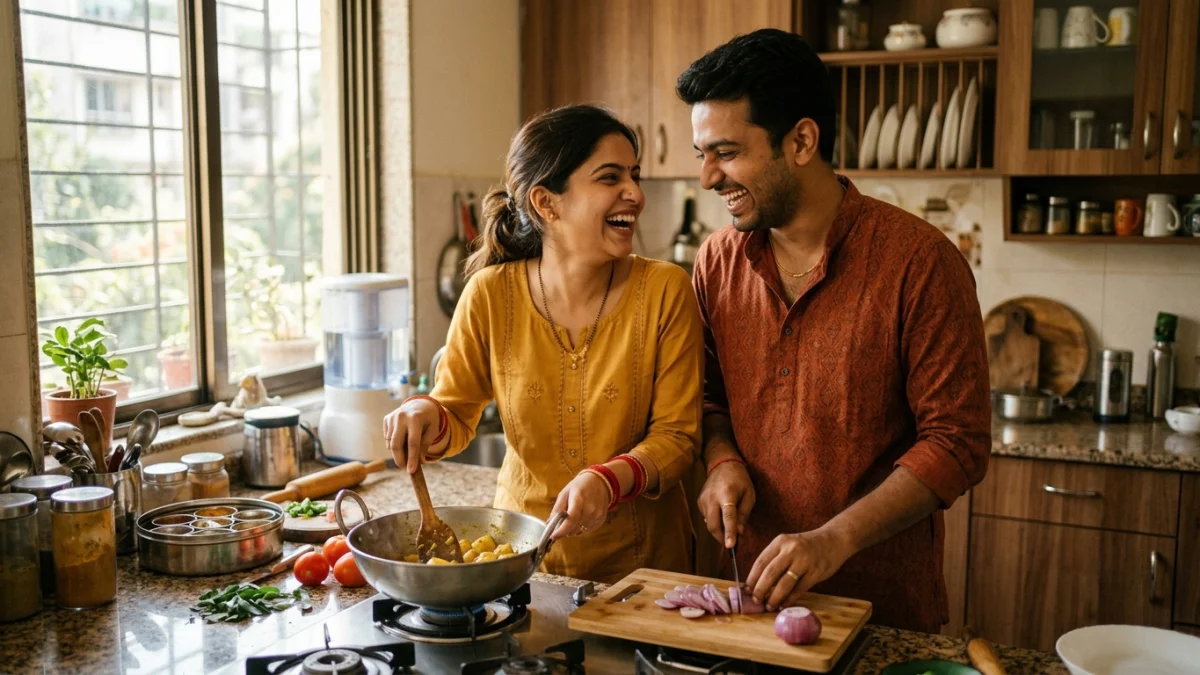
Shared rituals turn cohabitation into companionship. Morning tea together before the house wakes up. A Friday outing, even just to a favourite dhaba. Cooking one meal together every week. A short walk after dinner. These sound small, and they are, which is exactly why they work. Rituals create a rhythm of togetherness that does not depend on mood or occasion. On the weeks when you are tired, busy, or mildly annoyed with each other, the ritual still brings you into the same room, and that matters more than you would think.
In joint family setups, which are common in Pakistan, couple time gets swallowed easily by household routines and guests. Rituals protect it. Even twenty minutes of private conversation a day, guarded consistently, will do more for your bond than an occasional grand outing. Celebrate small wins together too: a promotion, the end of a hard week, a good piece of news. Marking these moments as a pair teaches both of you that this marriage is a team.
Physical affection also grows gradually and should never be rushed. Hand-holding, sitting close, a hand on the shoulder, these small gestures build comfort over time. Talk about comfort levels honestly rather than assuming. Many arranged couples find that emotional closeness unlocks physical ease, not the other way around. Small deliberate gestures of tenderness, given freely and without pressure, do more to keep a marriage warm than any grand display (keeping the spark alive in marriage is a skill, and it starts in these early months).
Give Connection Time
Some couples feel close quickly. Others need many months of shared experiences before the warmth arrives. Both are normal. Comparing your marriage to another couple’s timeline, a cousin who seemed madly in love within weeks, a friend whose arranged marriage looks effortless, creates pressure that actively slows connection down. What matters is not speed but direction: is the connection gradually becoming warmer, more honest, more relaxed? If yes, you are on track, whatever the calendar says.
Think of the first year as foundation work. You are learning habits, surviving first disagreements, making first compromises, and discovering how this person handles stress, illness, money pressure, and family tension. Do not judge the marriage at month three. A building looks unimpressive while the foundation is being poured. The couples who report the deepest love in arranged marriages often say the first six to twelve months were simply about learning each other, and the affection deepened after that.
There are quiet signs that connection is growing even without fireworks. You laugh together more easily. You miss them when they are away. You want their opinion before making decisions. You find yourself defending them to others. You share news with them first. None of these feel dramatic, but together they are the architecture of love. Notice them and let them encourage you.
Protect the Marriage From Outside Pressure
Well-meaning relatives give advice, make comparisons, take sides, and sometimes interfere directly. A new marriage needs a protective boundary: decisions belong to the couple first, and family input comes second. This does not mean disrespecting elders. It means that the marriage itself must be allowed to develop its own identity before everyone else’s opinions shape it.
Real Life Note: In many Pakistani families, marriages often strain not because of the couple, but because of outside interference, most commonly from the husband’s mother and sisters, and sometimes from the wife’s mother. Couples who set respectful boundaries with extended family early tend to protect their bond far better than those who let every disagreement become a family matter.
Building that boundary takes teamwork. Present a united front on important decisions, even if you debated them privately. Never air your disagreements in front of family members; it invites people to take sides and makes reconciliation harder. The husband should actively protect his wife’s dignity in his own home, and the wife should do the same for him in hers. When both partners know the other will stand by them, trust deepens quickly. Respect your elders, listen to their advice, but keep the final say inside the marriage.
Do Not Confuse Respect With Emotional Distance
Respect is an excellent foundation, but a marriage also needs emotional effort. Many arranged couples, especially from conservative backgrounds, are shy about expressing emotional and physical needs. Shyness is fine. Silence is not. If you want more affection, more conversation, or more companionship, communicate that need instead of assuming your partner should automatically know. A simple, kind request, like saying you would enjoy talking together in the evenings, works far better than silent disappointment.
Watch for the difference between respectful reserve and genuine emotional distance. Reserve softens over time as comfort grows. Distance stays cold no matter how much time passes. If months go by and your partner remains a polite stranger, name it gently: this marriage needs more of us in it. Often the other person feels the same gap and is simply waiting for permission to close it. One honest conversation can change the temperature of a marriage.
If emotional distance persists despite real effort from both sides, consider speaking to a counsellor together. In Pakistan this still carries some stigma, but it is changing fast, and seeking help is a sign of taking the marriage seriously, not of failure. A few guided conversations can unlock patterns that years of polite silence never will.
What If Deep Love Does Not Come?
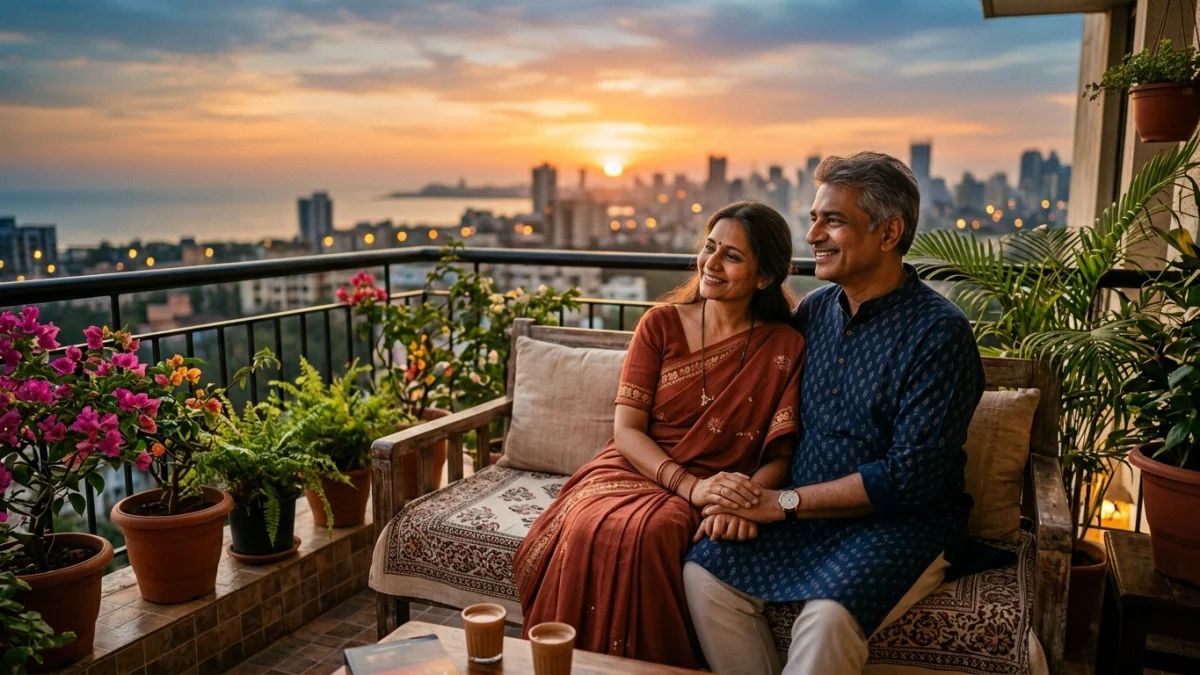
Honesty requires saying this: not every arranged marriage becomes a passionate love story. Some become deep partnerships of respect, care, loyalty, and companionship, which is a real and valid outcome. If your marriage is kind, stable, and mutually supportive, do not call it a failure because it looks different from a film. Many couples in long, contented arranged marriages would describe what they feel as something steadier and deeper than the word love usually suggests.
But distinguish contentment from resignation. If there is cruelty, contempt, chronic loneliness, or one partner’s needs being permanently ignored, that is not just how arranged marriages are. That is a problem to address, through honest conversation, family mediation, or professional counselling. A respectful partnership should still feel like a partnership. Enduring unhappiness in silence helps no one, least of all any children watching and learning what marriage means.
Also remember that love can arrive late. Many couples report that the deepest affection came in year three or five, after a child, after a hardship survived together, after the phase of learning each other ended and the phase of truly knowing each other began. Keep investing even when the returns feel slow. The couples who end up with the strongest bonds are usually the ones who kept showing up with patience long after the wedding excitement faded.
Frequently Asked Questions
Does love always happen in arranged marriage?
No relationship, arranged or otherwise, can guarantee love. But many arranged marriages do develop deep affection through time, effort, and compatibility. The structure of an arranged marriage, with its early conversations about values and expectations and its strong family support, actually gives love good conditions to grow in. What matters most is not how you met but what you both do after the wedding: the honesty, the kept promises, the friendship, and the patience. Couples who invest deliberately in these things very often find that love follows.
How long can it take to fall in love?
There is no fixed timeline, and anyone who gives you one is guessing. Some couples feel a genuine warmth within weeks. For others it takes many months, and for some the deepest affection arrives years in, after shared struggles and milestones. The first year is usually foundation work: learning habits, navigating differences, building trust. Instead of watching the calendar, watch the direction. If the relationship is gradually becoming warmer, more honest, and more relaxed, the timeline is working. Comparing your pace to other couples only creates pressure that slows things down.
Is physical attraction important in an arranged marriage?
Honestly, yes, it matters. Be truthful with yourself during the rishta process: marry someone you find at least pleasant to look at and be near, because hoping attraction will appear from nothing is a gamble. That said, attraction in arranged marriages very often grows alongside emotional closeness. Many people report finding their spouse more attractive after they fell for their character, their humour, or their kindness. The healthiest approach is to require a baseline of attraction at the start and let emotional intimacy deepen it, rather than expecting either fireworks on day one or a miracle later.
What if I feel only friendship after a year, not love?
Friendship is a strong base, not a consolation prize. In many lasting marriages, deep friendship is exactly what love grows out of, and some couples find that their bond stays in the register of profound companionship rather than romance, which can be deeply fulfilling. The useful question is about trajectory: is the relationship warming over time or cooling? If it is warming, give it more time. If it feels stuck, say so honestly to your partner and consider counselling together. What you should not do is suffer in silence or conclude too early that the marriage has failed.
Can second marriages also develop love this way?
Yes. Previous experience can sometimes make partners clearer about communication and expectations, which actually helps love grow faster. People entering a second marriage often know themselves better: what they need, what they cannot tolerate, how they handle conflict. That self-knowledge is an advantage. Blended families and past baggage need patience and honest conversation, but the same principles apply. Commitment first, trust built through kept promises, friendship nurtured deliberately, and affection given time to deepen.
Final Thoughts
An arranged marriage does not have to begin with a dramatic love story. It can begin with two people willing to learn each other honestly, one conversation, one kept promise, one shared meal at a time. Love, when it grows this way, is not the fragile love of first sight. It is the sturdy love of people who chose each other daily until choosing became feeling.
Sometimes the strongest part of the story is what happens after the wedding. Give it time, give it honesty, protect it from outside noise, and build the friendship first. The love story you are hoping for may already be underway, quietly, in the ordinary days you are living right now.
1 thought on “How Arranged Marriages Turn Into Real Love Stories”