
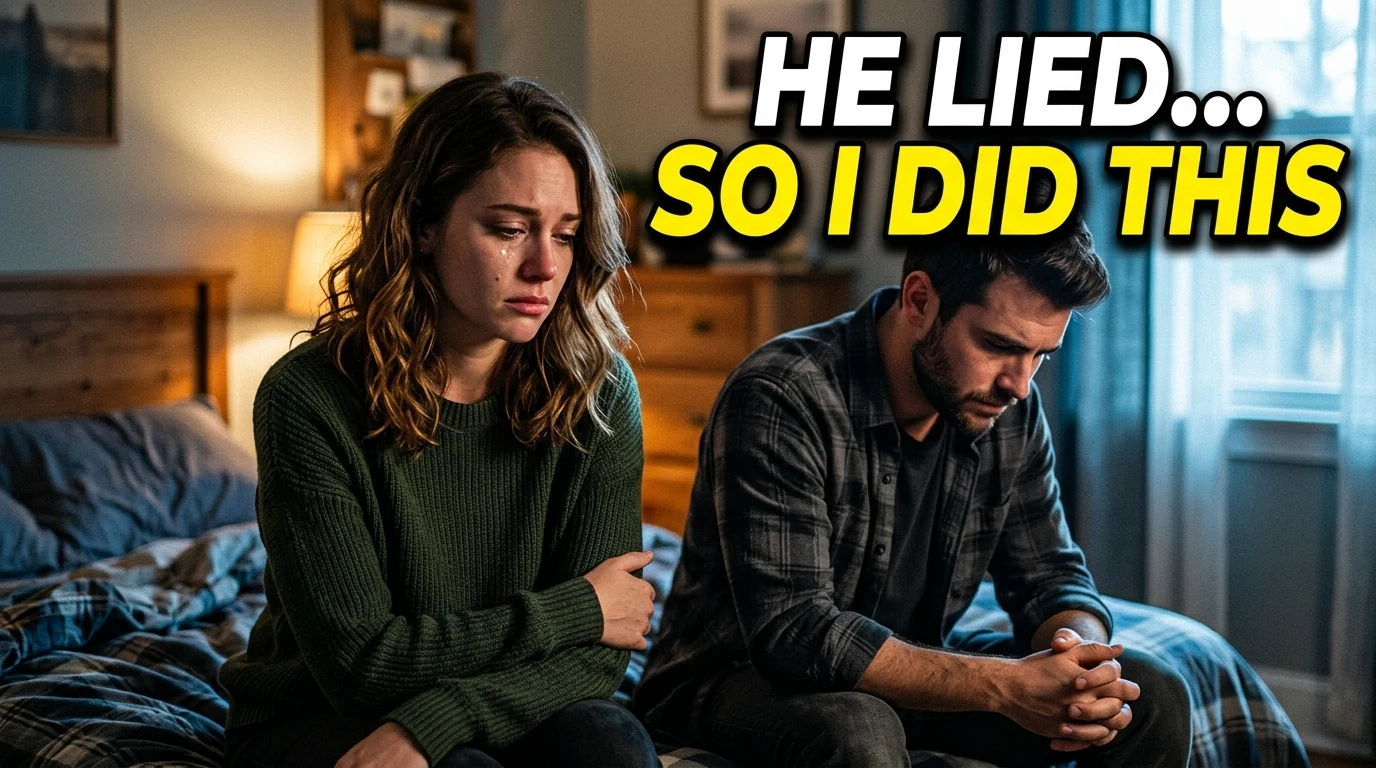
Finding out that your partner lied to you can shake the ground under a relationship. It is not just the hidden fact that hurts. It is the sudden realization that the person you trusted with your honest thoughts was keeping a separate version of reality from you. Rebuilding trust after lying is slow, uncomfortable work, and there are no shortcuts through it. But it is possible. Couples do come back from dishonesty, not by pretending it never happened, but by understanding why it happened, facing it fully, and then proving through consistent action that honesty is the new normal.
Why One Apology Usually Is Not Enough
A lie damages more than the specific fact that was hidden. It damages the entire system of communication the couple relied on. Before the lie, the hurt partner could take the other person’s words at face value. After the lie, every past conversation gets replayed with suspicion. Was that story true? Was that explanation honest? The lie does not just break one promise, it breaks the assumption that future conversations can be trusted too. That is why rebuilding trust usually requires far more than saying sorry. A single apology addresses the incident, but it does not repair the damaged system.
There is also a difference between an apology that explains and an apology that repairs. “I am sorry, I lied because I was afraid of your reaction” is honest about the motive, but it can accidentally sound like an excuse. The hurt partner hears that their own behavior is being blamed for the lie. A repairing apology goes further: it names what was done, acknowledges the harm it caused, and accepts that the other person gets to decide how long healing takes. Without that depth, apologies start to feel like a ritual the liar performs to close the topic, while the hurt partner is still sitting with open questions.
Finally, apologies lose power when the behavior behind them does not change. If someone apologizes for hiding money but continues to be secretive about finances, the apology becomes just another thing the hurt partner cannot trust. The real repair is not in the words at all. It is in the long, boring pattern of honesty that follows: telling the truth before being asked, keeping small promises, and staying open when it would be easier to hide. Trust comes back through evidence, not through speeches.
Take Responsibility Without Defending the Lie
Taking responsibility means owning the choice to lie, completely and without conditions. The full sentence is “I chose to lie, and that was wrong,” not “I lied because you would have reacted badly” or “I lied because the timing was never right.” Explanations about fear, pressure, or circumstances may all be true, and they can be discussed later. But leading with them turns responsibility into negotiation, and the hurt partner is not looking for a negotiation. They are looking for someone to stand up and say plainly: I did this, it was my choice, and I am not going to hide behind reasons.
One of the hardest parts of taking responsibility is resisting the urge to defend the lie’s size. Many people who lied will say things like “It was just one small lie” or “At least I did not cheat.” This is called minimizing, and it does real damage because it tells the hurt partner that their pain is an overreaction. From the outside, a lie about money or about talking to an ex may look small. From the inside, the hurt partner is not reacting to the size of the lie. They are reacting to the discovery that their reality was edited without their knowledge. Let the hurt be as big as it is, without grading it.
In Pakistani and South Asian relationships, lying often happens around family and social pressures rather than around affairs. A man may hide how much he gives to his own family because he fears his wife’s reaction. A woman may hide a friendship with a male colleague because she fears her husband’s suspicion. The cultural pressure to keep the peace is real, and it explains why the lie happened. But explaining is not the same as excusing. A useful way to frame it is: the pressure explains the temptation, but the choice to lie instead of having the hard conversation was still a choice, and honest ownership of that choice is where real repair begins.
Answer Reasonable Questions
The hurt partner will have questions, and answering them is part of the repair. They may ask about details that seem unimportant to you: exact dates, who else knew, what was said word for word. These questions are not interrogation for its own sake. They are how the hurt partner rebuilds a true picture of what happened, so they can stop imagining worse versions. When you answer calmly and completely, you are giving them the facts they need to replace the scary stories their mind keeps inventing. Short, defensive answers do the opposite: they leave gaps, and the imagination fills every gap with the worst possibility.
Avoid the pattern called trickle-truth, where new details appear only after the first story is challenged. Nothing destroys a recovering trust faster than discovering a second lie about the first lie. If you realize you left something out, bring it forward yourself, immediately, with an honest explanation of why it was omitted. Volunteered honesty is painful in the moment but it builds trust. Discovered dishonesty is catastrophic. Many couples who were recovering well have had their progress destroyed by one small detail that came out months later through someone else.
At the same time, “reasonable” has limits, and both partners should respect them. The hurt partner is entitled to the facts of what happened and what it means for the relationship. They are not entitled to an endless retelling of the story every night for a year, or to humiliating details that serve no purpose except punishment. A practical rule that works for many couples: set aside specific times to talk about the lie, so it does not bleed into every hour of every day. Outside those times, both partners agree to focus on the present. If you need guidance on the marriage side of this process, our article on husband wife trust issues and how to rebuild trust in marriage covers how couples turn honest conversations into lasting agreements.
Create Clear Boundaries for the Future
Once the truth is fully on the table, the couple needs to decide what honesty looks like going forward. Vague promises like “I will be more honest” fail because nobody knows what they mean in practice. Clear boundaries work better because they are specific and observable. For example: we will tell each other before meeting a particular person who was part of the lie. We will be open about our phones when asked. We will discuss any financial decision above an agreed amount before making it. Specificity removes the guesswork and gives the hurt partner something concrete to notice and appreciate.
Boundaries should protect the relationship without destroying the dignity of either person. There is a difference between healthy transparency and permanent surveillance. Agreeing to share your schedule for the next three months while trust is being rebuilt is a reasonable, time-limited measure. Agreeing to never have a private conversation again is not a boundary, it is a cage, and cages breed resentment. The person who lied needs to accept a period of extra openness with grace, and the hurt partner needs to accept that the goal is to eventually outgrow the monitoring, not to make it permanent.
Write the agreements down. This sounds formal, but couples who write their new expectations have far fewer misunderstandings later. Memory is unreliable in emotional times, and “I thought we agreed” arguments can restart old fights. A simple note on a phone or a page in a notebook, listing what was agreed and for how long, gives both people something to return to. Review the agreements after a few months. Some can be relaxed as trust returns. Some may need adjusting because real life is more complicated than plans. The review itself is a trust-building act: it says we take this seriously enough to keep working on it.

Do Not Turn Healing Into Permanent Surveillance
Checking every message may feel reassuring in the short term but cannot create genuine trust by itself. In the early weeks after a lie is discovered, extra checking is normal and even healthy. It is how the hurt partner calms their nervous system while the new pattern of honesty is still unproven. The problem starts when the checking never ends. If after six months of perfect honesty the phone is still being searched every night, the message being sent is: nothing you do will ever be enough. That message kills the motivation to keep trying.
The goal of all the transparency is to eventually make trust possible through consistent behavior, not endless monitoring. Think of the monitoring as training wheels. They are useful while balance is being learned, but a cyclist who never takes them off never learns to ride. Both partners need to agree on what the training wheels coming off will look like. Perhaps the check-ins become less frequent after three months of consistency. Perhaps location sharing ends after the first honest trip. Having a planned path back to normal privacy gives the person being monitored something to work toward, and gives the hurt partner a way to measure real progress.
If you find yourself unable to stop checking even when your partner has been consistently honest, that is a signal worth paying attention to. It may mean the wound is deeper than the conversations have reached, or that anxiety has taken on a life of its own. Individual counseling can help here, not because something is wrong with you, but because rebuilding trust requires a calm mind, and sometimes a professional can help quiet the alarm faster than willpower alone. There is no shame in getting help for the part of healing that happens inside you.
Give the Process Time
Recovery is rarely a straight line. Some days will feel almost normal. You will laugh together, plan things, and wonder if the worst is behind you. Then a song, a place, or a random memory will bring the old fear rushing back, and the hurt partner will be tearful or angry again out of nowhere. This does not mean the relationship is failing, and it does not mean the repair work was wasted. It means healing is happening in waves, which is how emotional wounds actually close. The person who lied needs to understand this pattern so they do not panic or get frustrated when a good week is followed by a bad day.
What matters during the bad days is how both people respond. The hurt partner can help by naming what is happening: “I am having a bad trust day, it is not about anything you did today.” That one sentence prevents a spiral. The person who lied can help by not getting defensive and by offering reassurance without being asked. Patience during setbacks is one of the most powerful trust builders there is, because it proves the commitment is real even when it is not being rewarded with immediate forgiveness. Anyone can be kind on the good days. Being steady on the bad days is what rebuilds a marriage.
Time alone does not heal, but time plus consistent behavior does. A common question is how long this takes, and the honest answer is that it depends on the seriousness of the lie and the consistency of what follows. A small lie confessed quickly might take a few months. A long deception might take a year or more. Instead of watching the calendar, watch the direction. Are the bad days getting further apart? Are the conversations getting easier? Is the checking becoming less necessary? If the answers are slowly turning positive, the relationship is healing, whatever the calendar says.

Frequently Asked Questions
Can trust return after a serious lie?
Sometimes, yes, if the truth is fully addressed and both people are willing to do the work. The seriousness of the lie matters less than the honesty of the repair. A serious lie that is confessed completely, with full responsibility and patient answering of questions, can heal. A small lie that is minimized, defended, and repeated cannot. The key factors are: no more secrets about the incident, genuine responsibility without excuses, consistent honest behavior over a long period, and the hurt partner’s willingness to eventually let the new pattern replace the old memory. Not every relationship survives a serious lie, and it is honest to say that some do not. But many do, and the ones that survive are usually stronger in honesty than they were before, because the couple finally learned to tell each other hard truths.
How long does rebuilding trust take?
There is no fixed schedule, and you should be careful of anyone who promises one. As a rough guide, rebuilding trust takes at least as long as the dishonesty lasted, and often longer. A lie that lasted a week and was confessed immediately might take two or three months of consistent honesty to move past. A deception that went on for a year might take a year or more. The seriousness of the lie and the consistency of future behavior both matter more than the calendar. Instead of counting days, look for direction: are triggers getting weaker, is openness becoming easier, is the need for checking fading? If the trend is positive, healing is happening. Trying to rush it usually backfires, because the hurt partner feels pressured to forgive before they feel safe, which creates a new wound on top of the old one.
Should the person who lied accept every demand for proof?
Not necessarily. Healthy transparency should not become permanent control. In the early stage of repair, the person who lied should accept a reasonable period of extra openness: answering questions, sharing schedules, being reachable. This is the price of the choice they made, and accepting it gracefully is part of taking responsibility. But there is a line. Demands that are designed to humiliate, that have no end date, or that control parts of life unrelated to the lie are not repair, they are punishment. The two partners should agree on what transparency looks like and for how long, and then review it together. If the demands keep growing even as behavior stays perfect, that is a sign the couple needs a counselor to help reset the process, because the goal is a relationship of two equals, not a warden and a prisoner.
How do I stop bringing up the lie in every argument?
This is one of the most common struggles after a betrayal. The lie becomes a weapon that gets pulled out whenever any disagreement happens, because it is the most powerful card the hurt partner holds. The problem is that every time it is used this way, the repair work loses ground. A practical approach is to agree that the lie gets its own dedicated conversations, separate from daily disagreements. When an argument starts drifting toward the old betrayal, either partner can say, “That belongs in our trust conversation, not in this discussion about the bills.” This is not avoidance. It is containment. The hurt partner still gets full space to process the betrayal in its own time, but daily life gets a chance to build new, positive patterns. If you cannot stop the pattern on your own, a few sessions with a counselor can help both partners learn how to keep the past in its proper place.

Final Thoughts
Trust comes back through boring, repeated evidence: telling the truth, keeping promises, accepting difficult conversations, and behaving consistently when nobody is checking. There is nothing dramatic about the process, and that is exactly the point. The lie was dramatic. The repair is quiet. It is the truth told before being asked, the promise kept without a reminder, the difficult conversation had instead of avoided. If you are the one who lied, your job is to be patient with a healing timeline you do not control. If you are the one who was hurt, your job is to stay open to the new evidence instead of living permanently in the old wound. Both jobs are hard. But couples who do this work honestly often discover something unexpected: a relationship that is more honest than it ever was before the lie. Not because the lie was worth it, but because the repair taught them how to be truly honest with each other at last.
After being in relationship with markiss for seven years,he broke up with me, I did everything possible to bring him back but all was in vain, I wanted him back so much because of the love I have for him, I begged him with everything, I made promises but he refused. I explained my problem to someone online and she suggested that I should rather contact a spell caster that could help me cast a spell to bring him back but I am the type that never believed in spell, I had no choice than to try it, I mailed the spell caster, and he told me there was no problem that everything will be okay before three days, that my ex will return to me before three days, he cast the spell and surprisingly in the second day, it was around 4pm. My ex called me, I was so surprised, I answered the call and all he said was that he was so sorry for everything that happened, that he wanted me to return to him, that he loves me so much. I was so happy and went to him, that was how we started living together happily again. Since then, I have made promise that anybody I know that have a relationship problem, I would be of help to such person by referring him or her to the only real and powerful spell caster who helped me with my own problem and who is different from all the fake ones out there. Anybody could need the help of the spell caster, his email: drosemudiamenspellhome@gmail.com or https://drosemudiamenspell.wordpress.com/ you can email him if you need his assistance in your relationship.