
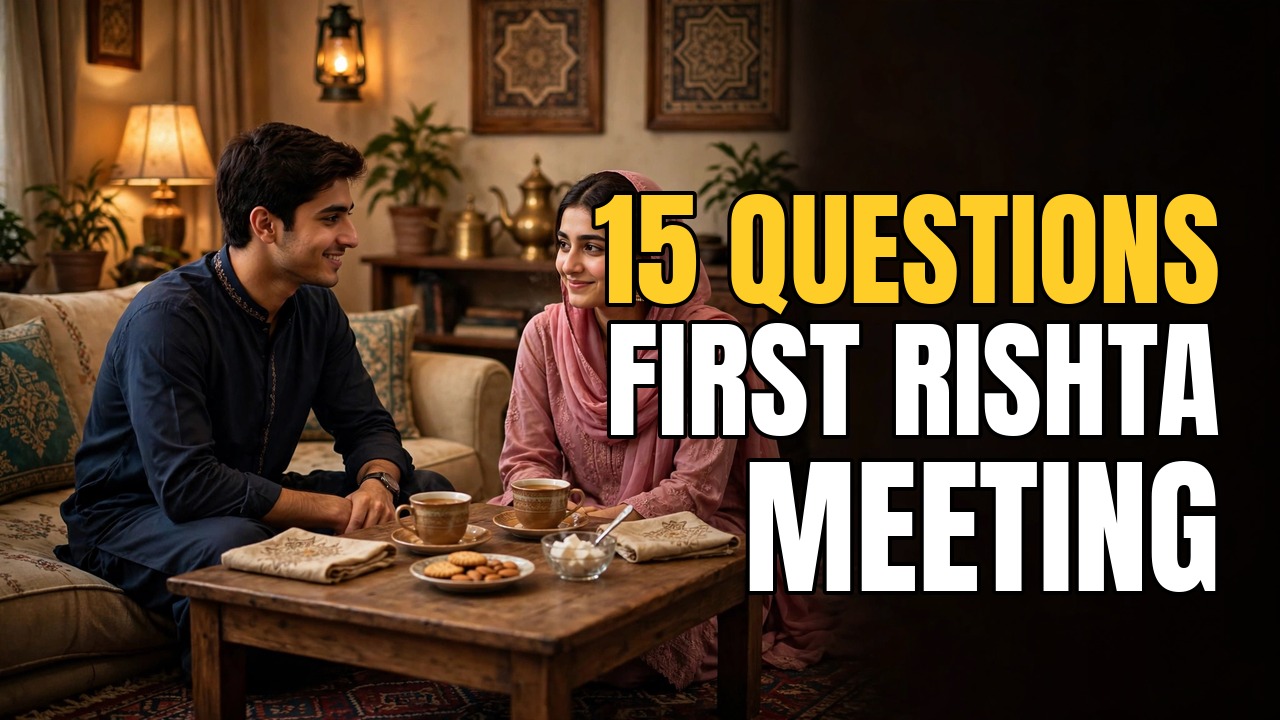
The first rishta meeting is one of the most awkward half-hours in Pakistani family life. Two families sit in a drawing room, tea is served, and then everyone looks at the young man and woman as if to say: well, talk. Most people either freeze and say nothing meaningful, or fire off questions like a job interview. Neither approach tells you what you actually need to know.
This guide collects the best questions to ask at first rishta meeting, grouped so the conversation flows naturally from light to meaningful. They are written for Pakistani arranged-marriage settings, where families are present and time is limited, but the thinking behind them works anywhere.
Why the First Meeting Matters More Than the Profile
A profile tells you what someone wants you to know. A meeting tells you how someone thinks. In thirty minutes of real conversation you can learn more about compatibility than in thirty days of exchanging biodatas. Pay attention not just to answers but to how they are given: does the person listen, do they ask about you in return, do they seem comfortable with honest discussion? Before the meeting, it is still worth doing your homework. Our guide on how to verify a rishta profile covers the checks to complete before anyone sits down with tea.
How to Ask Without Turning It Into an Interview
A few ground rules make the whole meeting easier. Ask one question at a time and actually listen to the answer instead of mentally loading the next one. Share something about yourself too, so it feels like a conversation rather than an interrogation. Avoid yes-or-no traps; “do you want children?” gets a one-word answer, while “how do you feel about having children, and when?” starts a real discussion. And remember that the first meeting is for learning, not for locking in every detail of your future life.

Start Light: Three Warm-Up Questions
Begin where it is easy. These questions lower everyone’s blood pressure, including yours.
1. What does a normal day in your life look like? This reveals more than “what do you do?” A daily routine shows discipline, social life, family involvement and free time, all in one answer.
2. What do you enjoy doing when you are not working or studying? Hobbies and interests show whether you might actually enjoy spending time together, which matters more than people admit.
3. Who are you closest to in your family, and why? The answer sketches family dynamics without asking anything intrusive. It also shows emotional awareness.
Life and Values: Four Questions That Reveal Compatibility
Once the conversation is flowing, move to what actually determines whether a marriage works.
4. What does a good marriage look like to you? This is the single most revealing question on this list. Listen for whether they describe a partnership, a set of duties, or something they have never really thought about.
5. How do you handle disagreement or anger? Everyone is polite over tea. You want to know what happens when politeness runs out. Look for self-awareness rather than perfect answers.
6. What role do religious or cultural practices play in your daily life? In Pakistan this question is essential, and it deserves a direct answer. Vague responses here often hide real differences that surface later.
7. What are your career plans for the next few years, and how do you see marriage fitting into them? This covers ambition, realism and whether they have actually connected their career plans to married life.
Practical Matters: Five Questions You Should Not Skip
These feel less romantic, but unanswered practical questions cause most early-marriage conflicts.
8. Where do you see us living after marriage, and have you discussed this with your family? Joint family or separate setup is one of the biggest decisions in a Pakistani marriage. It should not be discovered after the wedding.
9. How do you think finances should be managed in a marriage? You do not need exact salary figures at the first meeting, but you do need to know their philosophy: saver or spender, joint decisions or independent, any expectations about supporting parents.
10. What are your thoughts on the wife working after marriage? If this applies, ask it plainly and early. Evasive answers now become restrictions later.
11. How do you feel about children, and what timeline do you imagine? Even a rough sense of alignment here prevents painful surprises.
12. What responsibilities do you currently have toward your parents, and what do you expect after marriage? Financial or caregiving duties toward parents are honorable, but both sides should know about them before committing. The same question applies in reverse, so be ready to answer it yourself.
Going Deeper: Three Questions for the Brave
If the conversation is going well and there is time, these separate the thoughtful from the rehearsed.
13. Why do you want to get married now? Listen carefully. “My family asked me to” and “I want a companion to share my life with” lead to very different marriages.
14. What is something about yourself you are working on improving? Self-awareness is one of the best predictors of a healthy relationship. Defensiveness here is worth noting.
15. What would you do if we strongly disagreed about something important? This is a gentle way of asking about conflict resolution, compromise and respect, without sounding like a therapist.
Questions to Save for Later
Not everything belongs in the first meeting. Save deeply personal history, past relationships, medical details and detailed financial figures for later conversations, once both families are serious. Bringing them up too early puts people on the defensive and tells you nothing reliable. Similarly, avoid testing or tricking the other person. The goal is honest conversation, not catching someone out.
What Their Answers Tell You
After the meeting, review what you learned with a clear head. Look for patterns rather than perfect answers. Did they ask about you, or only talk about themselves? Were their answers consistent with what the profile claimed? Did difficult questions produce thoughtful answers or irritation? One awkward moment means little; most people are nervous. But consistent evasiveness, contempt for your questions, or pressure to decide immediately are worth taking seriously. If something felt off, our article on fake rishta profile warning signs can help you sort instinct from evidence.
It also helps to keep talking after the meeting. Respectful conversation before marriage, within whatever boundaries both families accept, is where real understanding develops. And if the meeting went well but your family needs help discussing next steps, see our guide on talking to parents about marriage decisions.
Conclusion
A first rishta meeting does not need to be perfect. It needs to be honest. These questions to ask at first rishta meeting, posed with genuine curiosity and listened to with an open mind, will tell you more than any profile ever could. Take notes afterwards, discuss them with your family, and give the decision the time it deserves. The right questions asked early save everyone from the wrong answers discovered late. For a classic longer list in a lighter vein, Dawn’s 36 questions for rishta meetings remains a fun read.
Frequently Asked Questions
How many questions should I ask at the first rishta meeting?
There is no fixed number. Fifteen is a comfortable upper limit for one meeting; most people naturally cover eight to ten in good conversation. Quality matters more than quantity. A few thoughtful questions with real listening beat twenty rapid-fire ones.
Is it rude to ask about finances or living arrangements at the first meeting?
No, as long as you ask about philosophies and expectations rather than demanding exact figures. Questions like “how do you think finances should be managed?” are reasonable and mature. Most families respect directness about practical matters.
What if the other person gives very short answers?
Some people are shy, especially at a first meeting with families watching. Try one open-ended follow-up before concluding anything. But if short, evasive answers continue across every topic, that pattern itself is information.
Should the families be present for these questions, or should we talk alone?
Follow whatever arrangement both families are comfortable with. In many Pakistani families, a brief private conversation is allowed after the family meeting. Deeper questions often get more honest answers with fewer people in the room.
What are the biggest red flags at a first rishta meeting?
Watch for refusal to answer basic questions, anger at reasonable questions, stories that contradict the profile, pressure to commit immediately, and any request for money or secrecy. Trust patterns over single moments.