
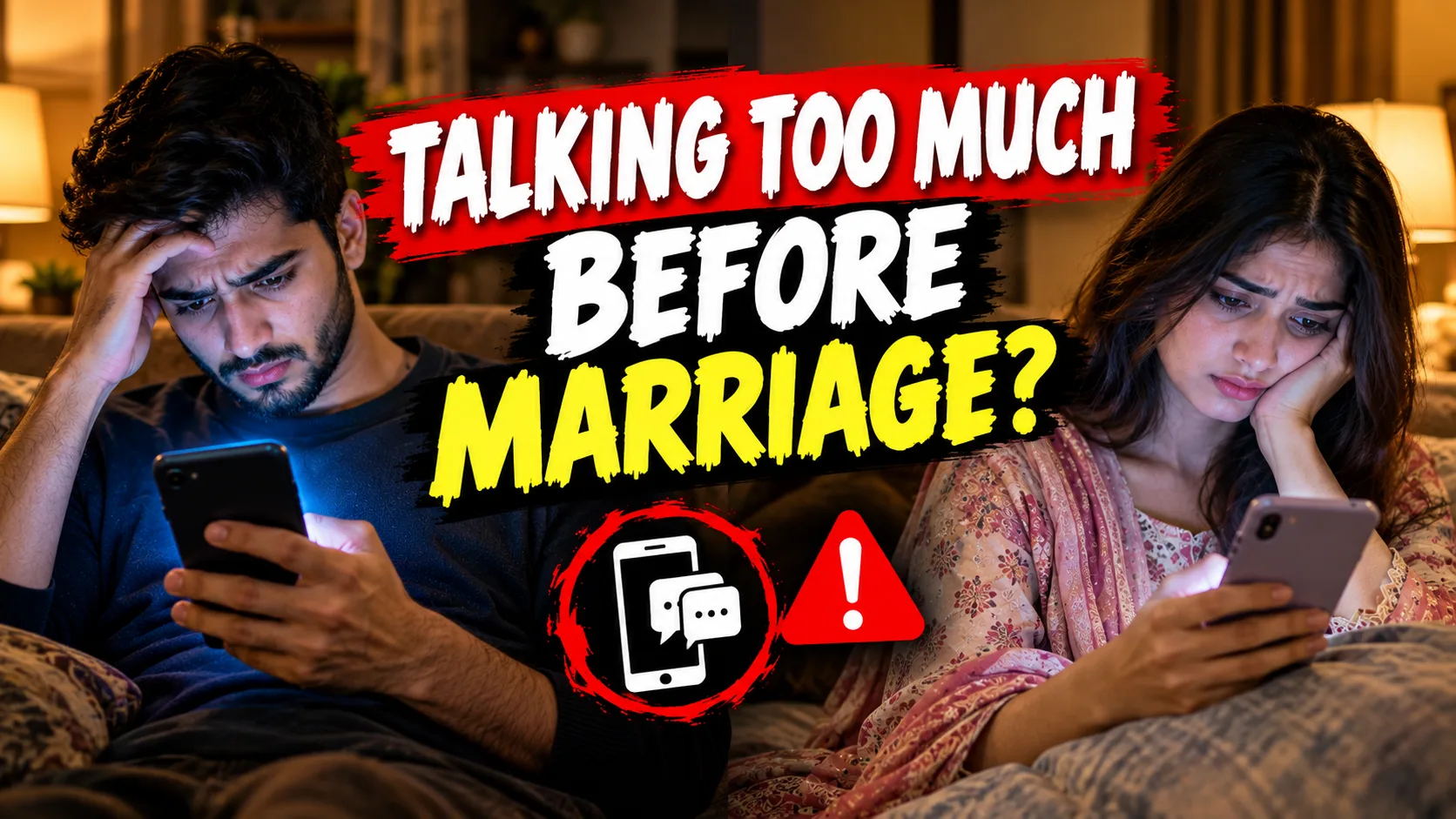
In Pakistani and South Asian families, the rishta process has changed a great deal in the last twenty years. Where couples once met for the first time on the wedding day, it is now common for a boy and girl to exchange phone numbers after the families agree that the match looks promising. Parents who once rejected the very idea of pre-marriage contact now often allow a few supervised conversations so the couple can feel comfortable with the decision.
This shift has raised a question that confuses many young people and their families: is talking on the phone before marriage a good idea, or does it create more problems than it solves? The honest answer is that talking itself is neutral. It is the way people talk, what they talk about, and how much secrecy surrounds those calls that decides whether the conversations help or harm. This article looks at the practical side of pre-marriage phone calls, the traps couples fall into, and how to use this time wisely.
How Phone Calls Before Marriage Usually Happen in Pakistani Families
In most arranged marriage settings in Pakistan, the first exchange of numbers happens after both families have completed their background checks and met each other. The boy’s family visits the girl’s home, elders talk, and if both sides are interested, the couple may be allowed to speak. In more traditional families, these calls happen with a parent or sibling nearby, or the conversations are kept short and purposeful. In more relaxed families, the couple may be given space to talk freely, sometimes for hours each night.
There is no single correct model, and families handle this differently across cities and villages. In urban areas like Lahore, Karachi, and Islamabad, longer private conversations are more common, often through WhatsApp calls and voice notes. In smaller towns, a few short calls in the presence of family members are still the norm. What matters more than the format is whether the conversations stay honest and purposeful, or whether they slowly turn into a private emotional world that the families know nothing about.
Talking Is Not the Problem
A rishta conversation can help two people learn about each other before marriage. A short, honest exchange about values, expectations, and daily life can reveal things that family meetings never will. Many people say their pre-marriage calls helped them enter the marriage with fewer surprises, because they already knew how the other person thinks about money, work, and family. Used well, talking is one of the best tools available during the engagement period.
The problem begins when endless private calls create a relationship fantasy that has not been tested against real responsibilities. When a couple talks for four or five hours every night, they are no longer getting to know each other. They are building an alternate world of romance and promises, far away from the ordinary life they will actually share. The voice on the phone becomes perfect, patient, and endlessly available, while the real person, with real moods and real pressures, stays hidden. Marriage then arrives as a shock, not because the person changed, but because the fantasy ended.
Why Late-Night Calls Can Create a False Sense of Closeness
People are often on their best behavior during long romantic conversations. Late at night, when the house is quiet and nobody is listening, it is easy to talk about dreams, feelings, and promises. Couples may spend hours discussing their future home, their imagined children, and their love for each other, while avoiding the harder subjects: money, family expectations, household responsibilities, and difficult habits. This creates emotional closeness, but it is closeness to a version of the person that may not exist in daylight.
There is also a practical cost. Couples who talk until 3 or 4 in the morning regularly start their days exhausted, perform poorly at work or university, and slowly let the rest of their life shrink around the phone calls. Parents notice the fatigue and the secrecy, and trust between the couple and their families starts to weaken. Emotional closeness is useful before marriage, but it is not the same as complete compatibility, and it should never come at the cost of your health, your work, and your family’s peace of mind.

What to Actually Talk About: Real Marriage Topics
Before marriage, conversations should include expectations around work, finances, living arrangements, children, family involvement, communication, and personal boundaries. These subjects may feel less romantic, but they are more predictive of daily married life than a hundred sweet conversations. Ask directly: how do you handle money when it is tight? Who will live with whom after marriage? What role will each person’s parents play in daily decisions? How do you behave when you are angry or stressed? The answers matter far more than compliments.
It helps to treat these calls as a series of small, honest interviews rather than romantic rituals. Keep a mental list of the things that genuinely worry you about married life, and raise them one by one across several conversations. Notice not just what the other person says, but how they react to difficult questions. Someone who gets defensive, changes the subject, or promises perfection without details is telling you something important. If you are unsure how to raise these topics with your family too, our guide on how to talk to parents about love marriage explains how to start honest family conversations without creating conflict.
Real Life Note: In love, the most important thing is trust. Where there is trust, there is respect, and where there is respect, trust grows stronger. The two feed each other. Use your pre-marriage conversations to build that trust through honesty, not through sweet talk alone.
Red Flags You Can Notice During Phone Conversations
Phone calls before marriage can actually reveal warning signs that formal family meetings hide. Pay attention if the other person refuses to discuss practical matters and always steers the conversation back to romance. Be cautious if they ask for complete secrecy from your family, pressure you to talk late at night against your parents’ wishes, or get angry when you set a boundary like ending the call at a reasonable hour. These behaviors show how they handle limits, and limits only get harder after marriage.
Other warning signs include inconsistent stories about work, income, or past relationships, reluctance to involve families even after months of talking, and excessive jealousy about your daily life. A person who demands to know where you are every hour before marriage will not become more relaxed afterwards. If something feels wrong but you cannot explain it, slow down and talk to a trusted elder or sibling. For more on spotting deception early, read our article on fake rishta profile warning signs, which covers the patterns dishonest people follow during the rishta process.
Arranged and Love Marriages Face Similar Risks
The same pattern can happen in both. A couple may build a highly curated relationship before marriage and then discover that ordinary life feels different. In love marriages, couples often assume that because they already know each other, they have nothing left to learn. But dating someone and sharing a household with them are two very different experiences. The person who was charming on weekend outings may struggle with shared finances, in-law dynamics, and the sheer routine of daily life.
In arranged marriages with a long engagement and heavy phone contact, the same illusion forms from the other direction. The couple falls in love with each other’s phone personalities and then feels disappointed by the real person. The solution in both cases is not silence. It is more realistic conversations: talking about real problems, observing how the other person behaves under stress, and spending time with them in normal family settings rather than only in private romantic bubbles.
Involve Families Where Appropriate
In many South Asian families, family involvement can provide context and accountability. That does not mean couples cannot get to know each other. It means important decisions should not depend entirely on a private relationship that nobody else understands. When families are part of the process, small problems get noticed early. A mother may pick up on a tone or a pattern in the conversation that the couple, lost in new feelings, would miss completely.
Practical involvement does not have to mean sitting in the same room for every call. It can be as simple as letting your parents know when you talk and for roughly how long, discussing what you learned with a trusted elder, or occasionally including family members in a group video call. Couples who keep everything secret often find that secrecy itself becomes the problem. When families discover months of hidden late-night calls, the breach of trust can damage the marriage before it even begins, even if nothing inappropriate ever happened.
Choose Quality Over Quantity
You do not need five-hour calls every night to know someone. A smaller number of honest, purposeful conversations may reveal more than constant contact that leaves no room to observe how each person handles ordinary life. Two focused thirty-minute conversations a week, where you discuss real topics and listen carefully, will teach you more about a person than a month of midnight chats about nothing. Quality means honesty, purpose, and attention, not duration.
Constant contact has another hidden cost: it can make you bored of each other before the wedding. When every evening is spent on the phone, there is nothing left to discover, and the excitement that should carry into the marriage is already spent. It is better to leave some mystery and some space. Let the person miss your voice a little. That space also protects you emotionally, because a long engagement with constant contact creates deep attachment to someone you are not yet married to, and broken engagements hurt far more when the attachment is intense. If late replies or sudden silence start appearing in your calls, our article on why late replies happen explains what those patterns usually mean.
Real Life Note: One of the biggest reasons couples drift apart is actually talking too much. The same conversations on the phone all day and then the same talk at home can make anyone bored. Giving each other a little space keeps the connection fresh, so resist the urge to be on the phone together every free minute.
Frequently Asked Questions
Is talking before marriage always a bad idea?
No. Conversation can be useful, and in many cases it is one of the best ways to reduce surprises after the wedding. The concern is not talking itself, but unrealistic intensity, secrecy from families, or avoiding important practical subjects. A couple that talks honestly about real life, with their families aware, is using the engagement period exactly as it should be used. Problems start when the calls become secret, excessive, or purely romantic with no substance.
How much talking is healthy?
There is no fixed number of hours that works for every couple. Focus on quality, honesty, and whether the conversations help you understand real compatibility. As a practical guide, a few focused conversations per week are enough for most couples. If you find yourself talking for hours every single night, unable to sleep, neglecting work, or hiding the calls from your family, those are signs the quantity has gone too far. Healthy pre-marriage contact leaves your normal life intact and your energy up.
Does this apply to love marriages too?
Yes. Couples who date can also create an idealized version of the relationship before marriage. Knowing someone in a dating context is different from sharing responsibilities, finances, and in-law relationships with them. Love marriage couples should use the engagement period for the same honest conversations about money, family, and daily life that arranged marriage couples need. The advantage of a love marriage is familiarity, but familiarity with one side of a person is not the same as knowing the whole person.
What should I do if my family does not allow phone calls before marriage?
Respect your family’s decision while finding honest ways to learn about the person. You can ask your parents to arrange a few supervised meetings, prepare a list of questions you want answered, and request that your concerns reach the other family through elders. Many couples have entered strong marriages without pre-marriage phone contact. What matters is that your real questions get asked and answered somehow, not that you personally make the calls. Forcing secret contact against your family’s wishes usually damages trust far more than any conversation could help.
Is it normal to feel unsure even after many conversations?
Yes, some nervousness before marriage is completely normal, even after long and honest conversations. Phone calls can only reveal so much, and no amount of talking removes all uncertainty from such a big decision. What matters is whether your doubts are about small unknowns, which are natural, or about real red flags you have been avoiding. If you have discussed the important topics, involved your family, and still feel uneasy about something specific, take that feeling seriously and talk it through with someone you trust before moving forward.
Final Thoughts
The goal before marriage is not to talk as little as possible. It is to use conversation wisely: learn the person, discuss the life you are actually planning, and leave enough space for reality to remain part of the picture. A few honest conversations about real topics will serve your marriage far better than a thousand hours of romantic talk that avoided everything difficult.
Remember that trust is the real foundation you are building during this time. Every honest answer, every respected boundary, and every conversation your family knows about adds a brick to that foundation. Talk enough to know each other truly, keep your families in the loop, and protect the freshness of the relationship for the life you will share after the wedding. That is how phone calls before marriage become a blessing instead of a burden.
2 thoughts on “Should You Talk on Phone Before Marriage?”