What You Will Find In This Article
- Why Fake Rishta Profiles Are Becoming More Common
- The First Red Flag: Photos That Look Too Perfect
- When the Conversation Moves Too Fast
- Money Requests Should Always Make You Stop
- Refusing Video Calls or Always Having an Excuse
- Stories About Family and Work Don’t Add Up
- How to Verify Someone Before You Trust Them
- What to Do If You Think a Profile Is Fake
- Final Thoughts
Meeting someone through a dating app or rishta platform can feel exciting. You start talking, the conversation seems easy, and before long you may find yourself checking your phone to see if they’ve replied.
For someone looking for marriage, that emotional connection can become even more meaningful. Maybe you’re divorced and ready to start over. Maybe you’re a widow hoping to find companionship again. Or perhaps you’re simply looking for someone who seems serious about marriage.
Unfortunately, scammers understand those feelings very well.
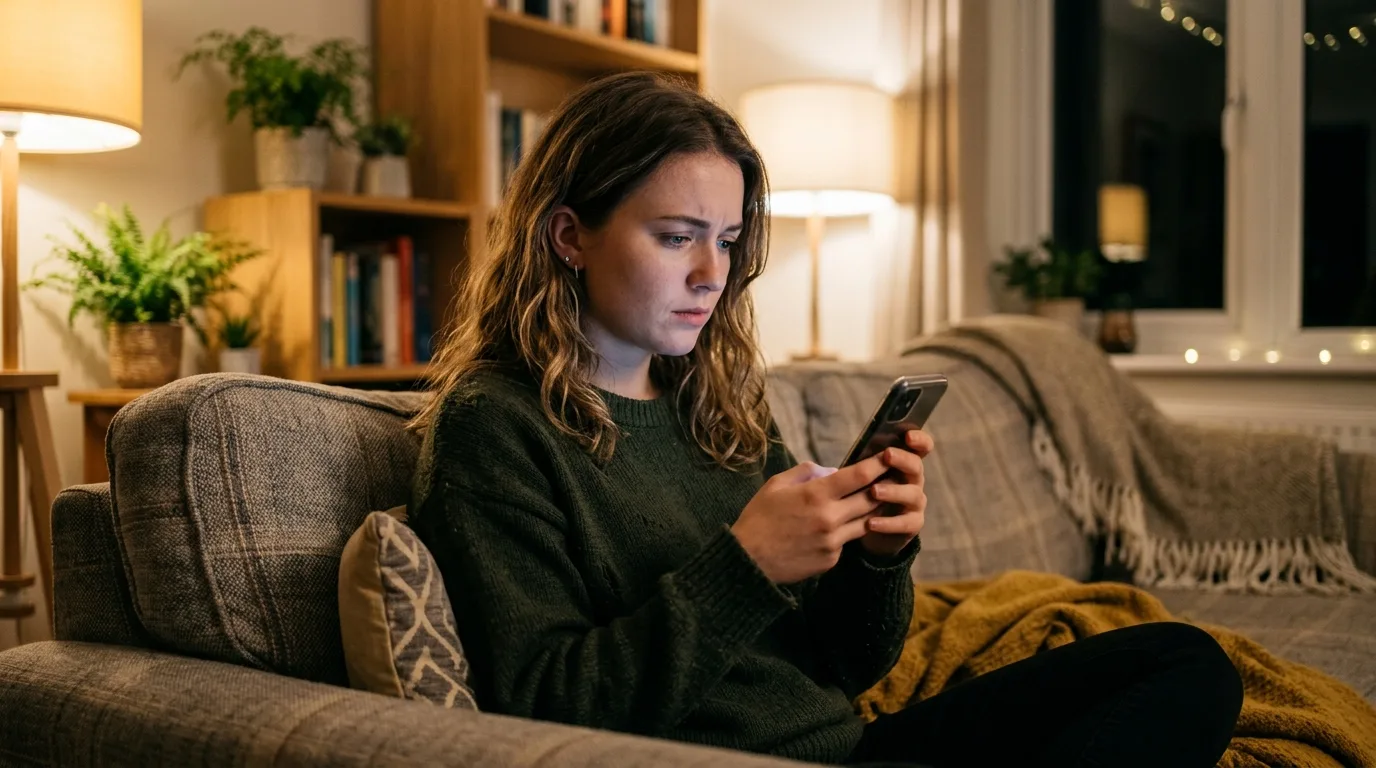
A fake rishta profile doesn’t always look suspicious at first. In fact, the person behind it may be friendly, patient, and surprisingly good at making the conversation feel personal. They may ask about your family, remember small details you’ve mentioned, and say exactly the things you’ve been hoping to hear.
That’s why knowing the warning signs matters. You don’t have to become suspicious of everyone you meet online. You just need to know when it’s worth slowing down and checking what’s actually going on.
Why Fake Rishta Profiles Are Becoming More Common
More people are now using the internet to look for marriage. Not everyone has a large family network, trusted relatives, or friends who can introduce them to suitable people. Dating apps and online rishta platforms have made it much easier to meet someone outside your usual social circle.
That convenience also creates opportunities for dishonest people.
A scammer doesn’t necessarily need to build a complicated story from the beginning. Sometimes they simply create a profile using someone else’s photographs and start talking to several people at once. In other cases, fake profiles are carefully maintained for weeks or even months before the person behind them asks for anything.
The reasons can vary. Some people are looking for money, while others want personal information, private photographs, or access to accounts. Some simply enjoy manipulating people.
Whatever the reason, the important thing is to remember that a convincing conversation doesn’t automatically prove that the person is genuine.

The First Red Flag: Photos That Look Too Perfect
One of the easiest things to fake online is a profile photo.
Be cautious when every photograph looks professionally taken, carefully posed, and almost identical in quality. Real people’s photo collections are usually more mixed. You might see an older picture, a casual selfie, a family photograph, or a photo taken in an ordinary place.
That doesn’t mean attractive or professional-looking photos are proof of a fake account. They aren’t.
The problem is when the photographs are combined with other warning signs.
For example, perhaps every picture looks like it came from a model’s portfolio, the person has very little information on their profile, and they avoid sending a recent casual photograph when you ask. That’s when it becomes reasonable to investigate further.
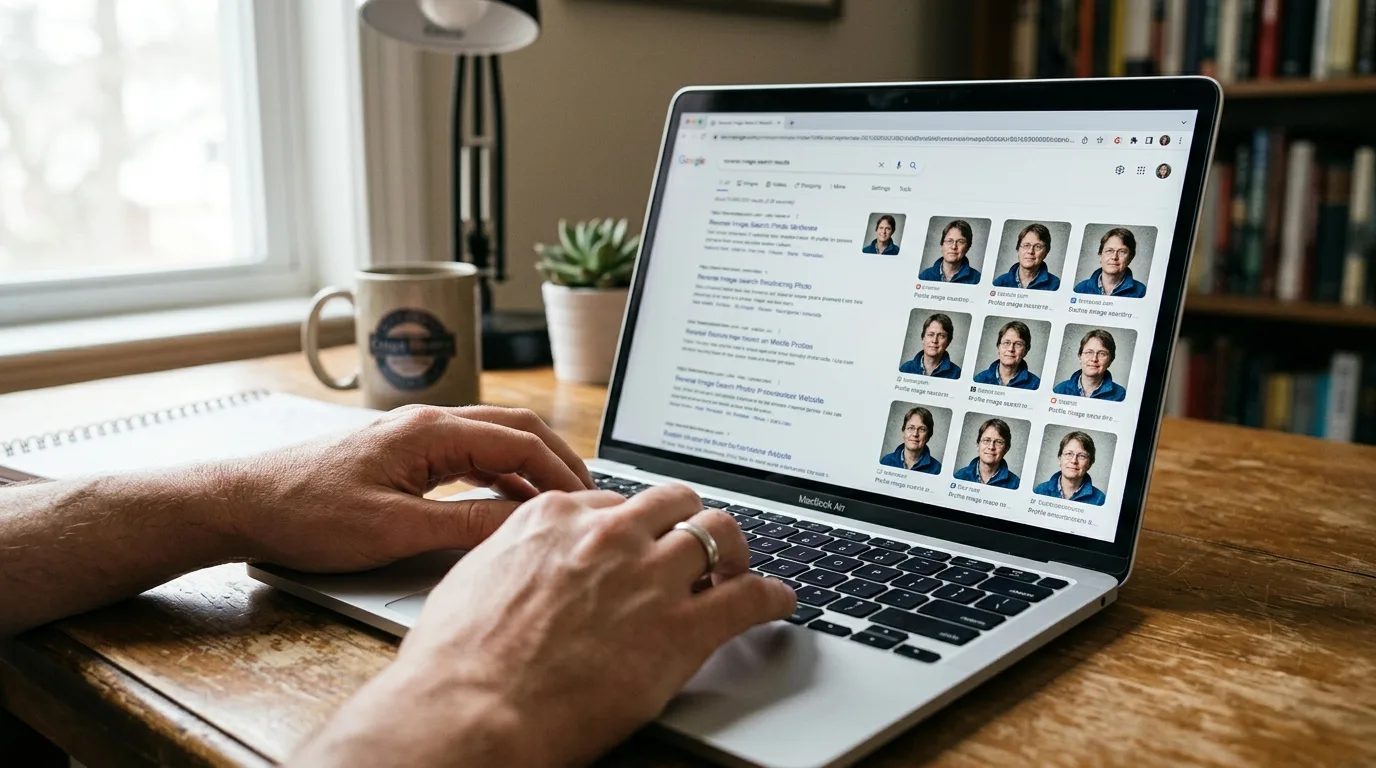
You can also use a reverse image search to check whether the photograph appears elsewhere online. If you find the same image connected to a completely different name or profile, take that seriously.
A few minutes of checking can save you from becoming emotionally involved with someone who isn’t who they claim to be.

When the Conversation Moves Too Fast
There’s nothing wrong with two people liking each other quickly. Sometimes a conversation simply clicks.
The problem is when someone starts creating a serious emotional relationship before you’ve had enough time to establish who they really are.
Be careful if someone you’ve only known for a few days starts talking about marriage, eternal love, moving in together, or a future life with you while still avoiding basic questions about their real life.
Scammers often use emotional intensity because it makes people lower their guard. Once you feel that you have found someone special, you’re more likely to overlook things that would normally seem strange.
Pay attention to the balance of the conversation too.
Does the person actually answer your questions about their work, family, location, and everyday life? Or do they quickly turn every question back into romantic talk?
A genuine connection usually develops naturally. You learn ordinary things about each other along the way. It doesn’t have to feel like a love story from the first week.
Money Requests Should Always Make You Stop
This is one of the clearest warning signs, but it can still be difficult to recognize when you’ve already become emotionally attached.
The request may not sound like a request for money at first.
They might tell you that a family member is sick. They may say they have a temporary financial problem, need help paying a hospital bill, are stuck somewhere, or have an urgent payment that they cannot make themselves.
The details can be very convincing.
But the basic rule is simple: don’t send money to someone you’ve met online but haven’t properly verified and met in real life.
It doesn’t matter how emotional the story sounds.
It also doesn’t matter if they promise to return the money next week or say that you’re the only person they can trust.
A serious marriage proposal should not begin with financial pressure.
If someone becomes angry, threatens to end the relationship, or tries to make you feel guilty because you won’t send money, that’s an even bigger warning sign.
Refusing Video Calls or Always Having an Excuse
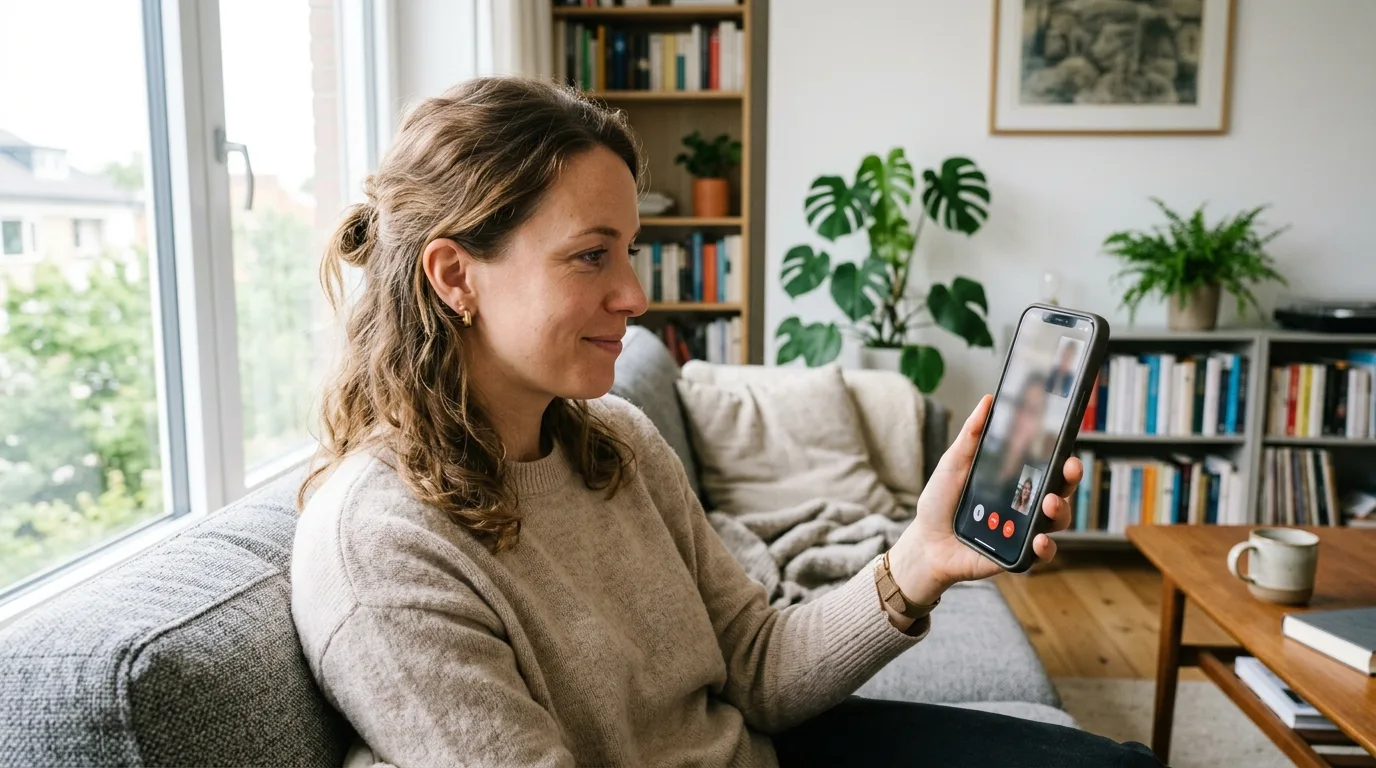
A video call isn’t a perfect identity check, but consistently refusing one is certainly worth noticing.
Maybe the person’s internet connection is bad. Maybe they’re shy. Perhaps they’re at work or don’t have privacy at a particular time. Any one of those things can happen.
The problem is the repeated pattern.
You suggest a video call today, and they promise tomorrow. Tomorrow becomes the weekend. Then suddenly their camera stops working. After that, there’s another excuse.
If this continues for weeks, don’t keep explaining the situation away for them.
Someone who genuinely wants to build a serious relationship should normally be willing to find some reasonable way to communicate face-to-face, especially when marriage is being discussed.
And remember: even a video call doesn’t prove everything. A person can still lie about their name, job, location, or intentions. Use video calls as one part of verification rather than treating them as absolute proof.

Stories About Family and Work Don’t Add Up
Sometimes the biggest clue isn’t one dramatic lie. It’s a collection of small contradictions.
Listen to the details people naturally share over time.
How many siblings do they have? Where did they grow up? What kind of work do they do? Where does their family live? Have they previously been married? What are their plans for the future?
You don’t need to interrogate someone or keep a written record of every sentence they say. Just pay attention.
If someone says they have two brothers one week and later talks about three brothers, that’s worth asking about.
If their job changes from a business owner to an employee, or their hometown suddenly becomes a different city, don’t ignore it simply because the rest of the conversation feels good.
There can be innocent explanations for mistakes, of course. People forget things and sometimes describe situations differently.
What matters is the overall pattern. When several important details keep changing, it’s reasonable to step back and verify what you’re being told.
How to Verify Someone Before You Trust Them
You don’t need to become a private investigator. A few sensible checks can make a big difference.
Start by having a video call before becoming heavily emotionally invested. If the person claims to be serious about marriage and their intentions are genuine, don’t be afraid to discuss involving families when the time is appropriate.
Ask normal questions about their life and notice whether their answers remain consistent over time.
If they have shared their full name, workplace, business, or other public information, you can also search those details online. You may find useful information, although remember that online searches can produce false matches, so don’t treat one search result as proof either way.
You can also ask for a recent photograph or suggest a simple video call at a mutually convenient time.
Most importantly, don’t rush because someone is putting pressure on you.
A genuine person may appreciate reasonable caution. Someone with dishonest intentions may become unusually defensive, angry, or manipulative when you ask simple questions.
That reaction itself can tell you something.
What to Do If You Think a Profile Is Fake
If something doesn’t feel right, you don’t have to prove that the person is a scammer before protecting yourself.
Slow the conversation down.
Stop sharing private information such as your home address, workplace details, identity documents, bank information, passwords, or financial information. Be especially careful with intimate photographs because once you send something online, you may lose control over where it ends up.
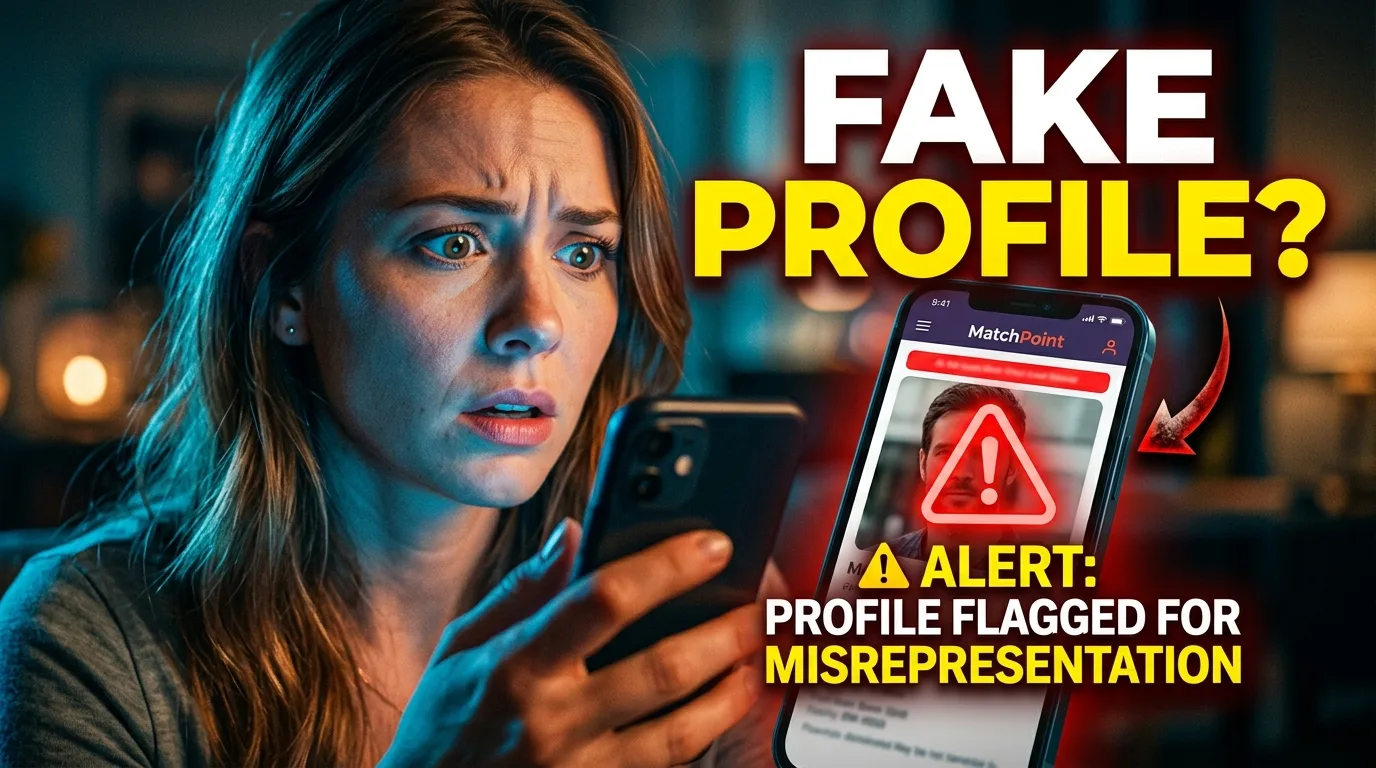
If you believe the profile is fake, use the reporting option provided by the dating or rishta platform.
If money has already been sent, save the messages, payment records, profile screenshots, phone numbers, email addresses, and any other relevant information. Don’t delete everything immediately out of embarrassment. Those records may be useful when reporting the incident to the relevant platform, bank, payment service, or authorities. Organizations like the FTC’s consumer protection division also publish updated guidance for people dealing with online relationship scams.
And don’t blame yourself.
People who run these scams often know exactly how to create trust. Being friendly, hopeful, or willing to believe someone isn’t a character flaw.
Final Thoughts
Looking for love or marriage online doesn’t mean you have to assume everyone is a scammer.
There are genuine people using dating and rishta platforms every day. The goal isn’t to become so suspicious that you stop giving anyone a chance. It’s to give trust gradually instead of giving it all at once.
Take your time. Ask questions. Have a video call. Verify important details. Don’t send money simply because someone has created an emotional story around it.
Most importantly, pay attention when something repeatedly feels wrong, the same way you would with any other red flag early in a relationship.
A healthy relationship doesn’t need you to ignore obvious warning signs just to keep it alive. Someone who genuinely wants a future with you should be able to handle reasonable questions, sensible boundaries, and a little patience.
Sometimes the safest decision isn’t walking away from love.
It’s simply taking a little more time to find out whether the person you’re talking to is actually who they say they are.
New Rishta Stories Added DailyTap to explore more relationship advice➤